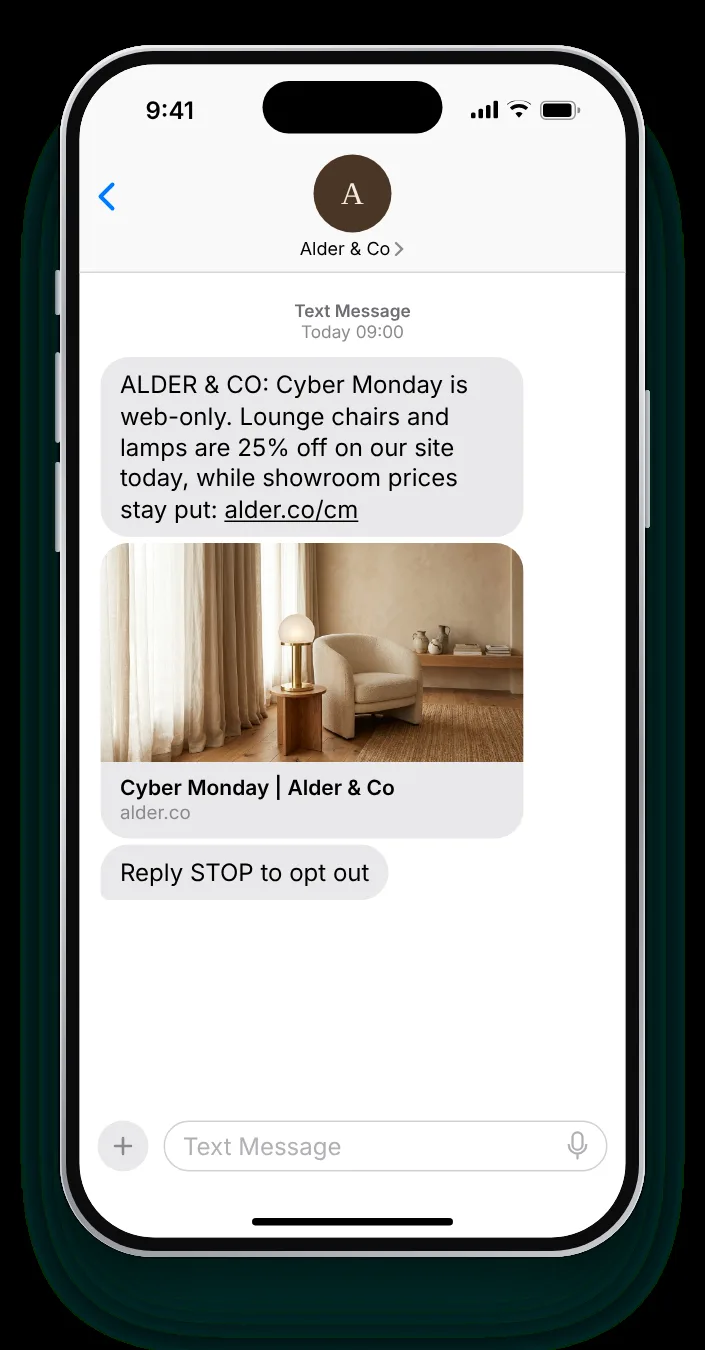
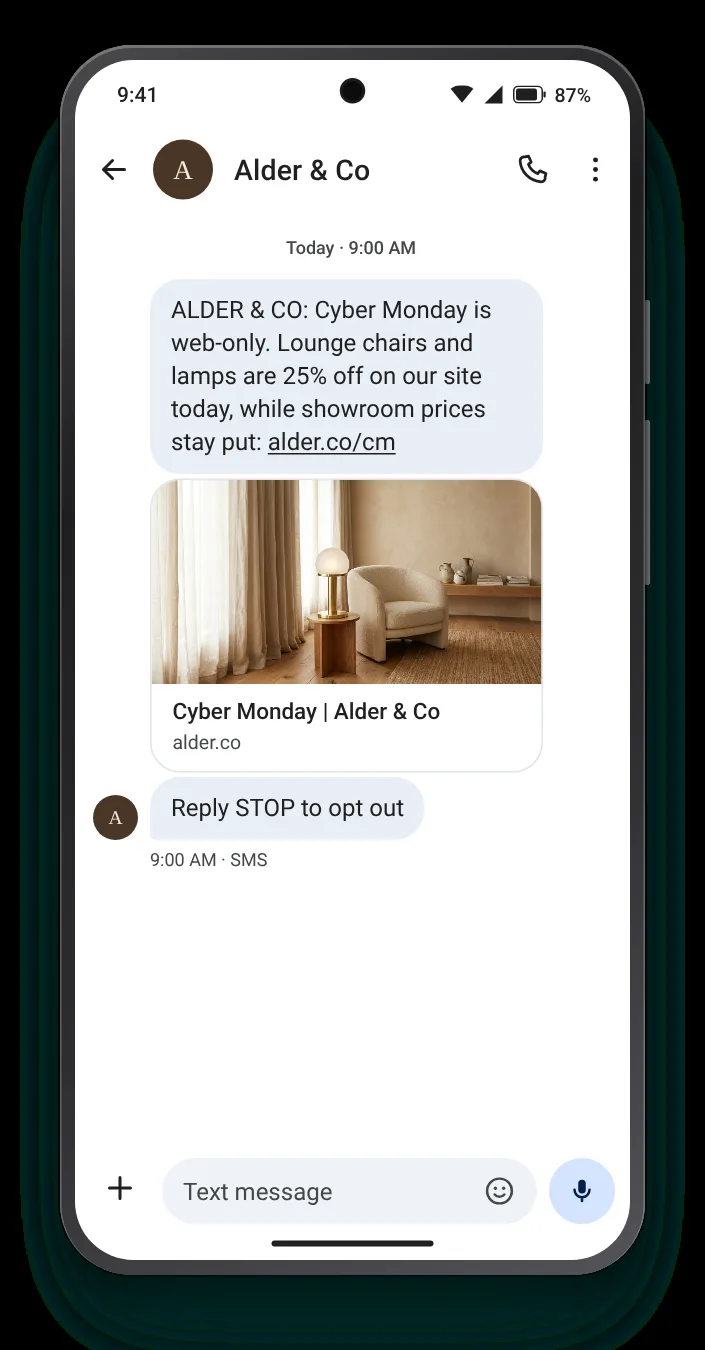

Website prices, not showroom prices
Stores with showrooms get asked whether the deal applies in person. Saying up front that it lives on the website saves a wasted trip and a disappointed customer.
Cyber Monday falls on a working day and happens almost entirely on phones. Subscribers read between meetings, at lunch and on the commute home. These six texts are written for those gaps.
From the 9am note that the deal is web-only to the evening reminder in local time. Every text is given in two lengths, both measured against one segment.


Stores with showrooms get asked whether the deal applies in person. Saying up front that it lives on the website saves a wasted trip and a disappointed customer.


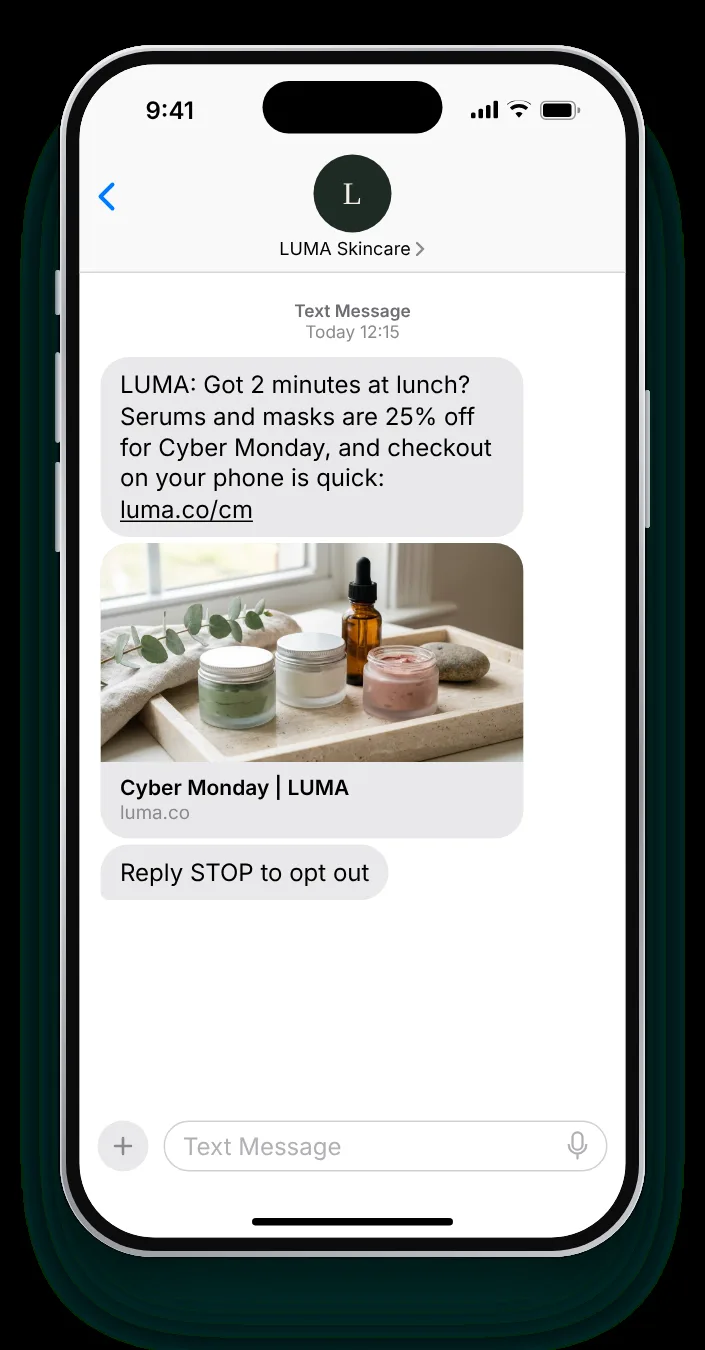
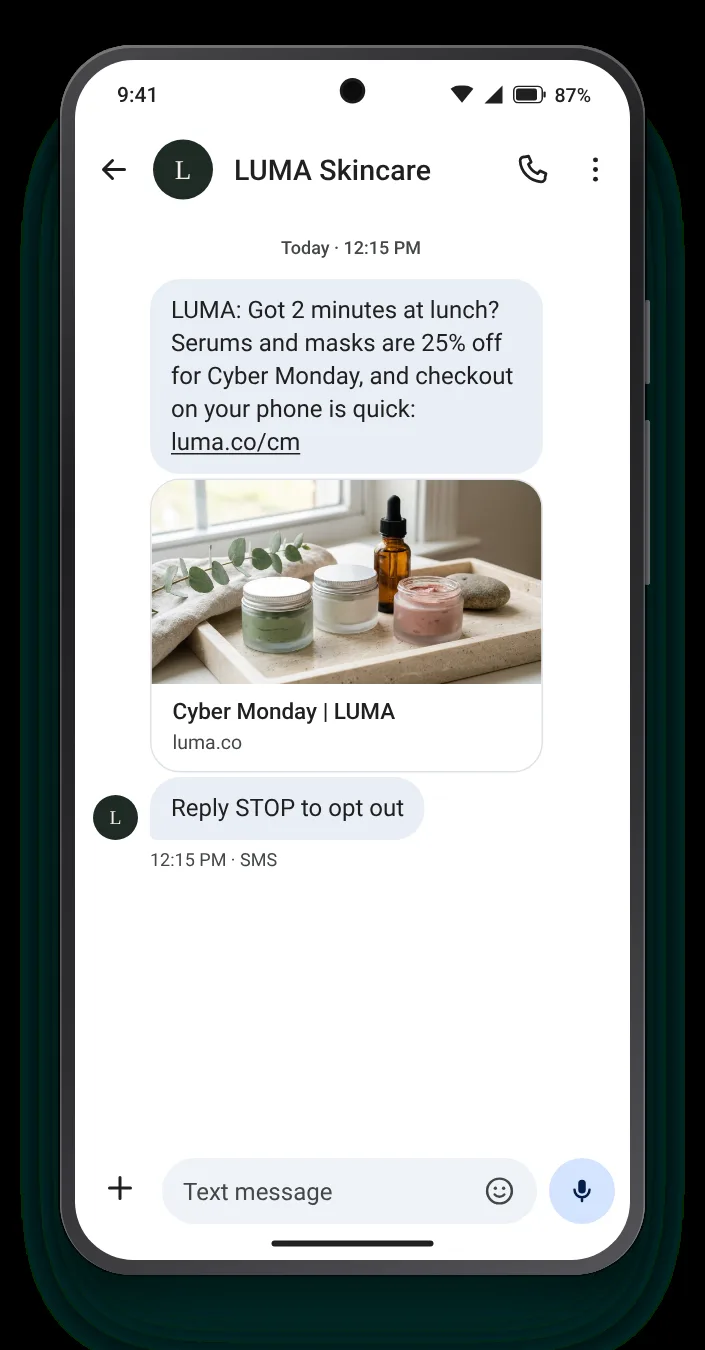
On a Monday, most people shop between meetings. A text that lands at lunch, and promises a checkout that fits inside it, matches how the day is actually spent.


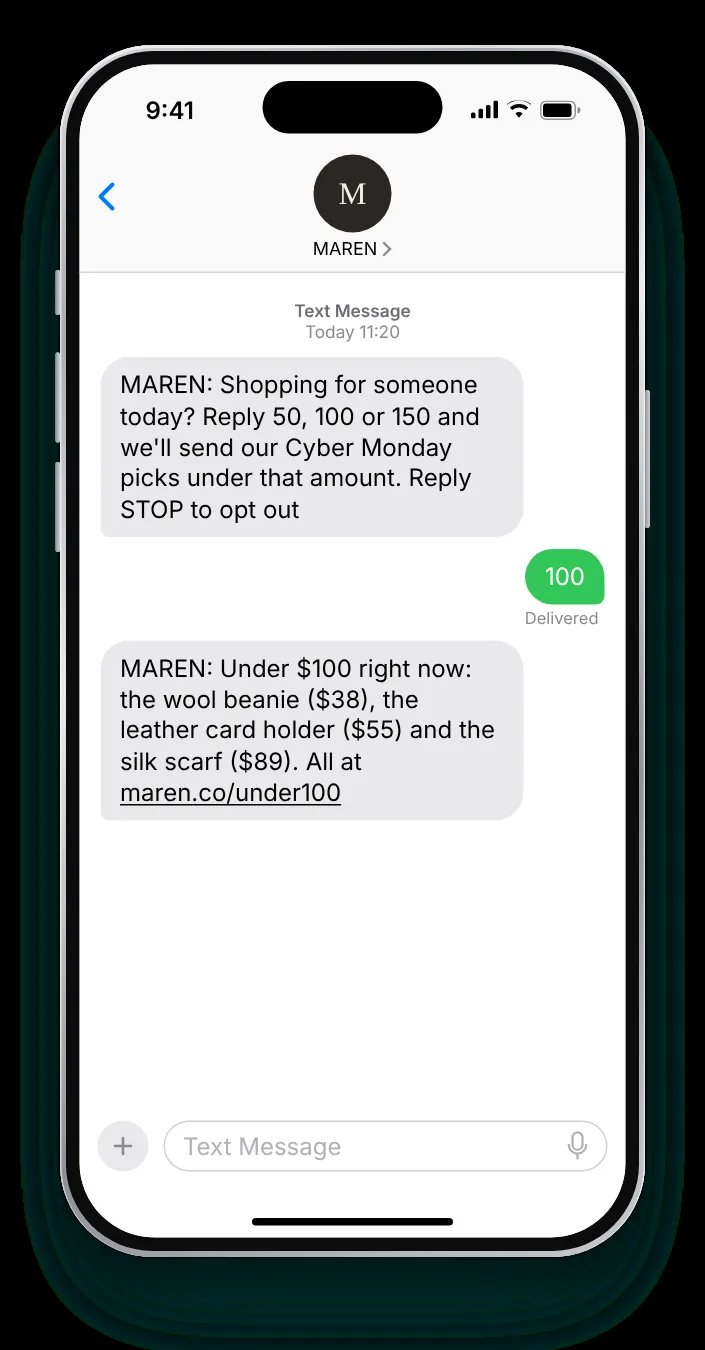
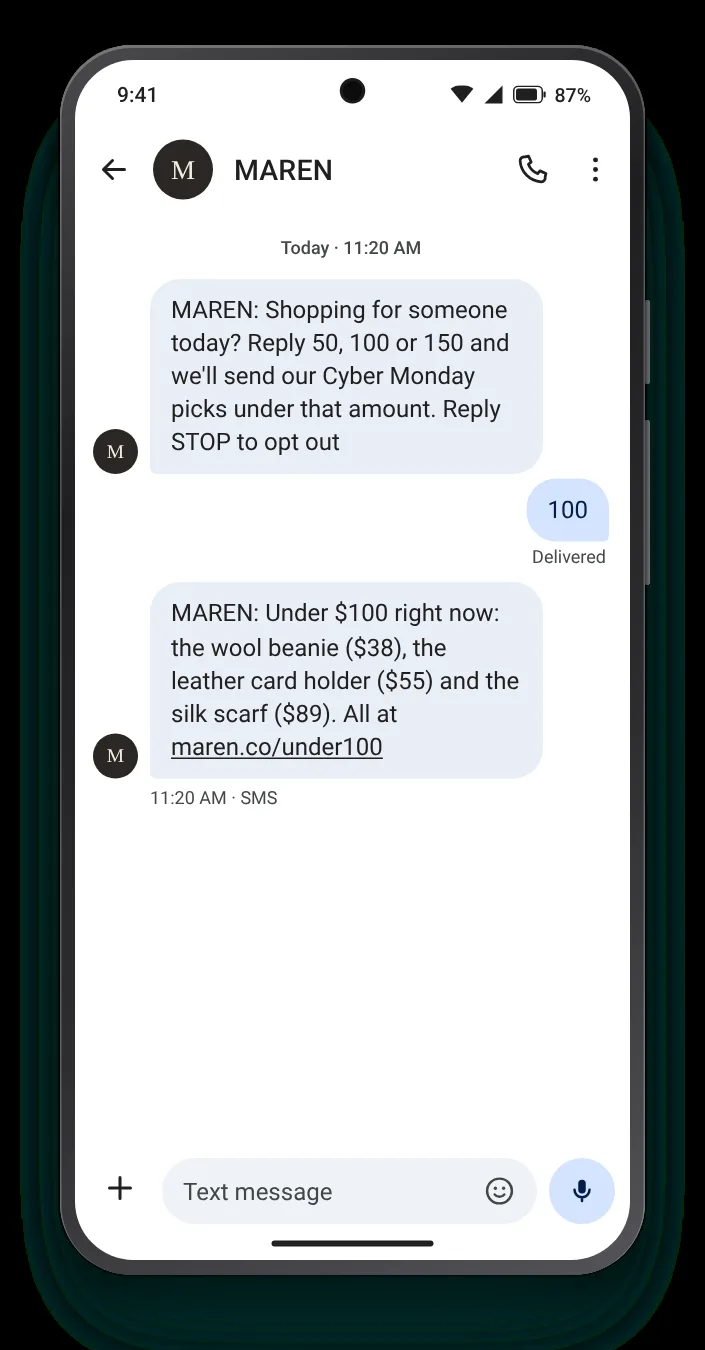
Browsing a full sale on a small screen is slow. A reply with a spending limit lets you do the narrowing, and the answer arrives as a short list in the same thread.


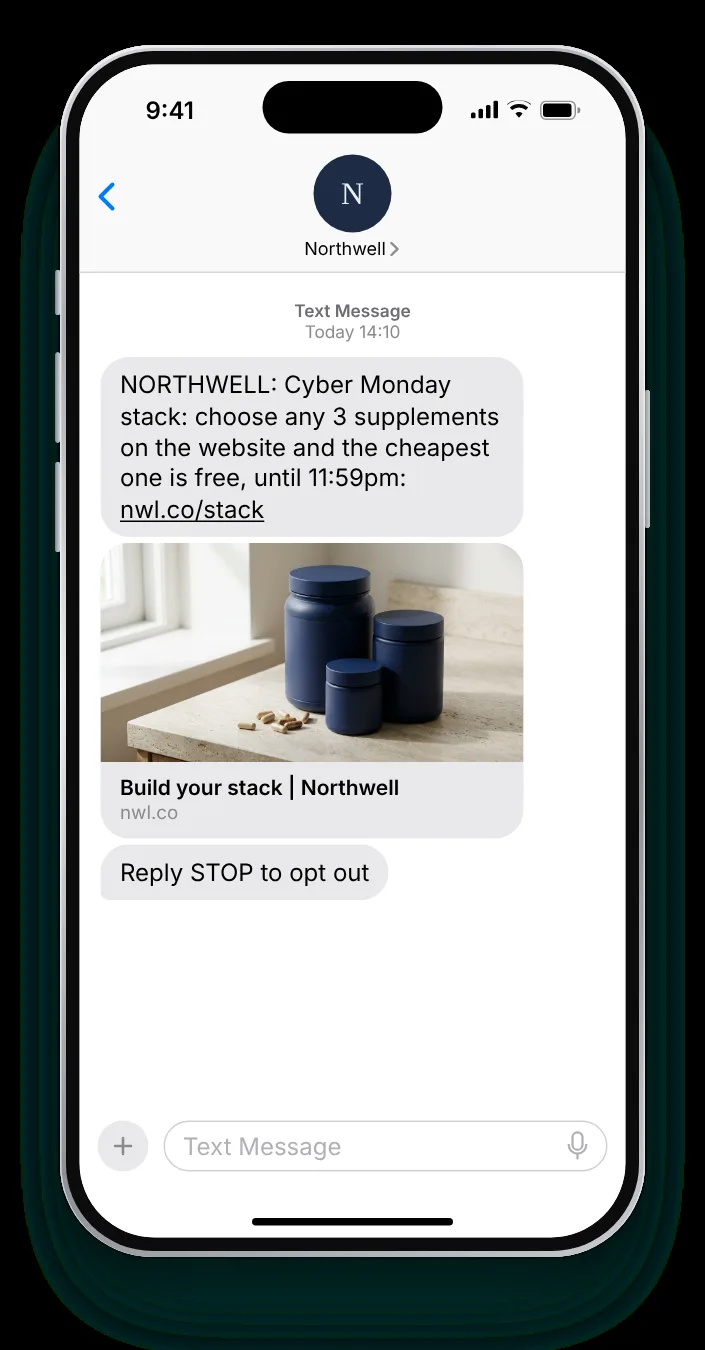
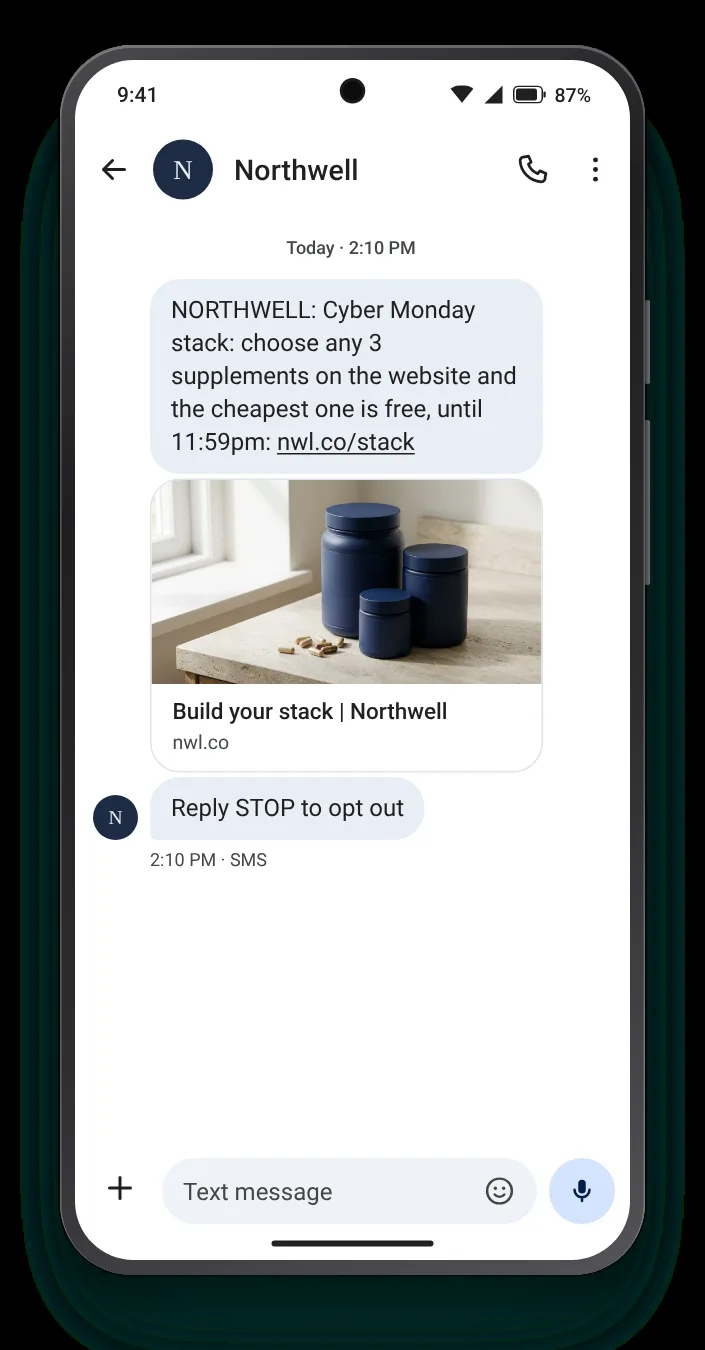
A mix-and-match offer suits a day when people compare tabs. It raises the basket without a flat cut on every product.


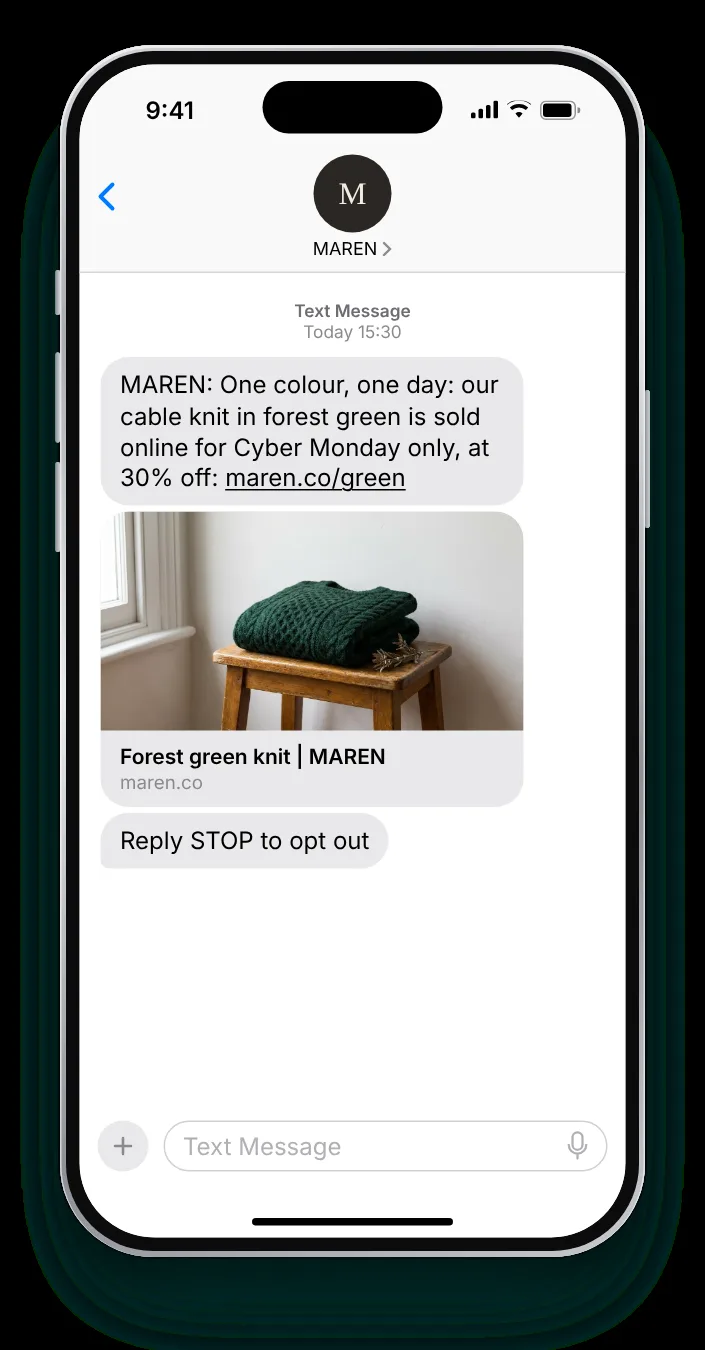
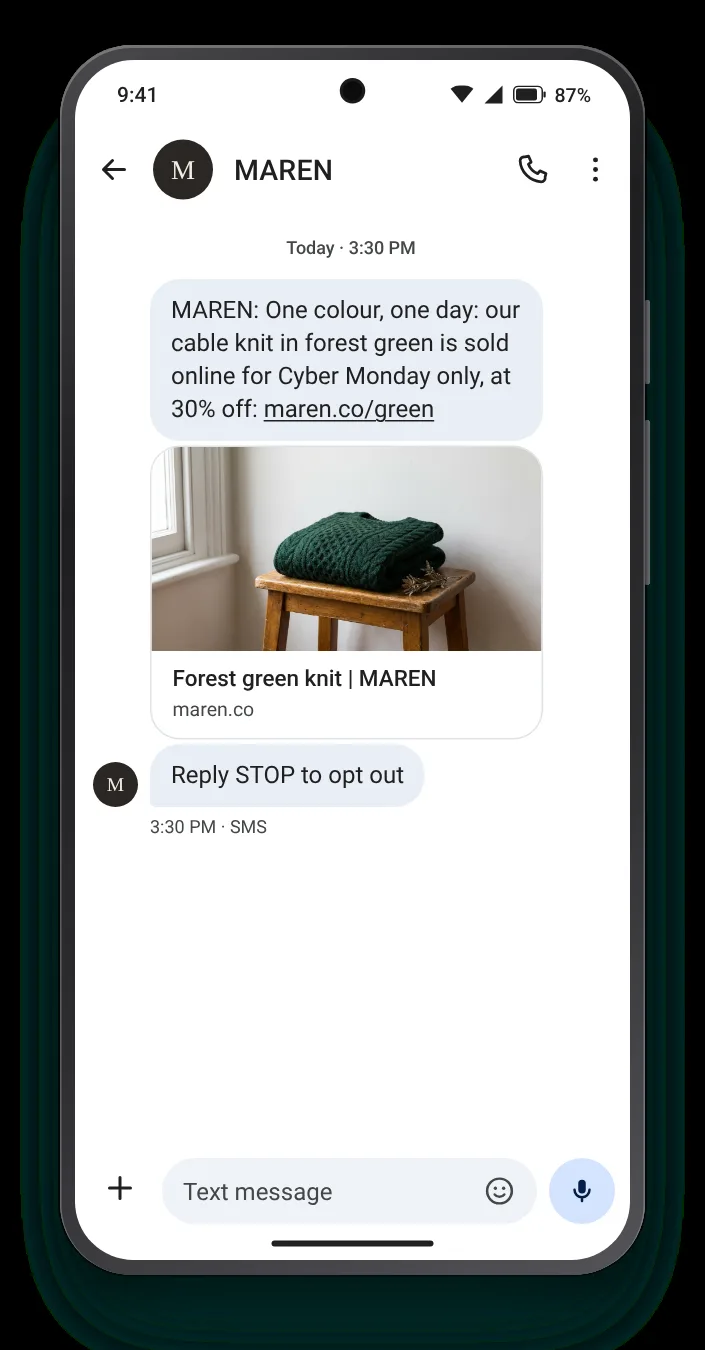
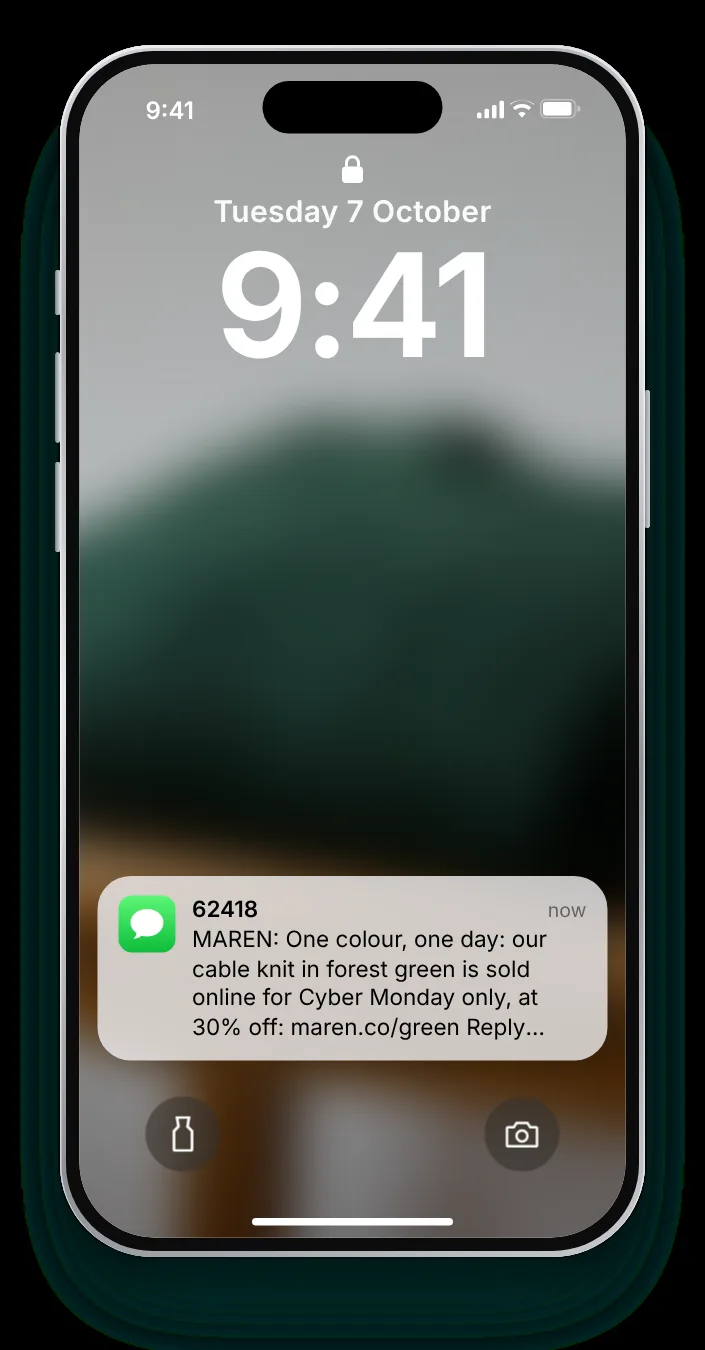
Every store has a percentage on Cyber Monday. Something that exists only online, only today, hands the afternoon send a reason of its own.


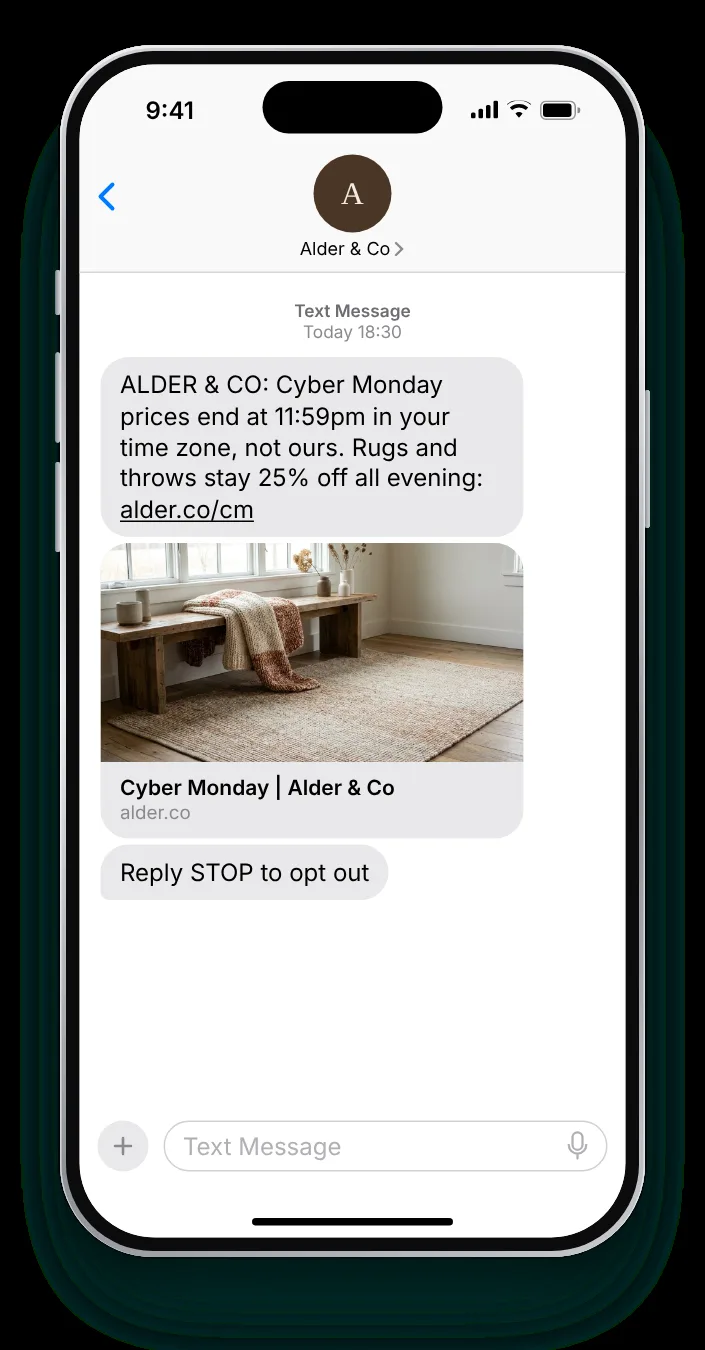
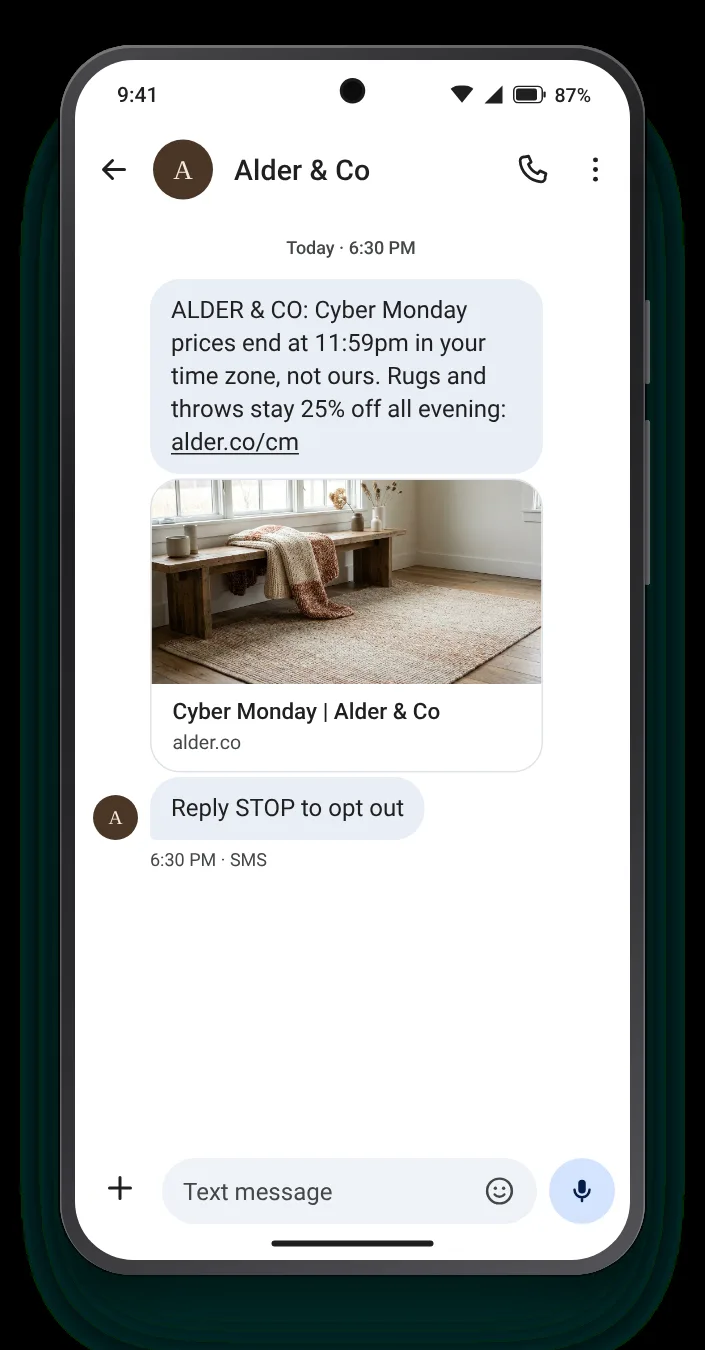
A national store that says midnight leaves half the list guessing whose midnight. Naming the subscriber's own clock removes the doubt.
Begin with one of the six, then swap in your own offer, link and send time; the handset updates with each keystroke. If a character outside the plain alphabet slips in, the counter says so.


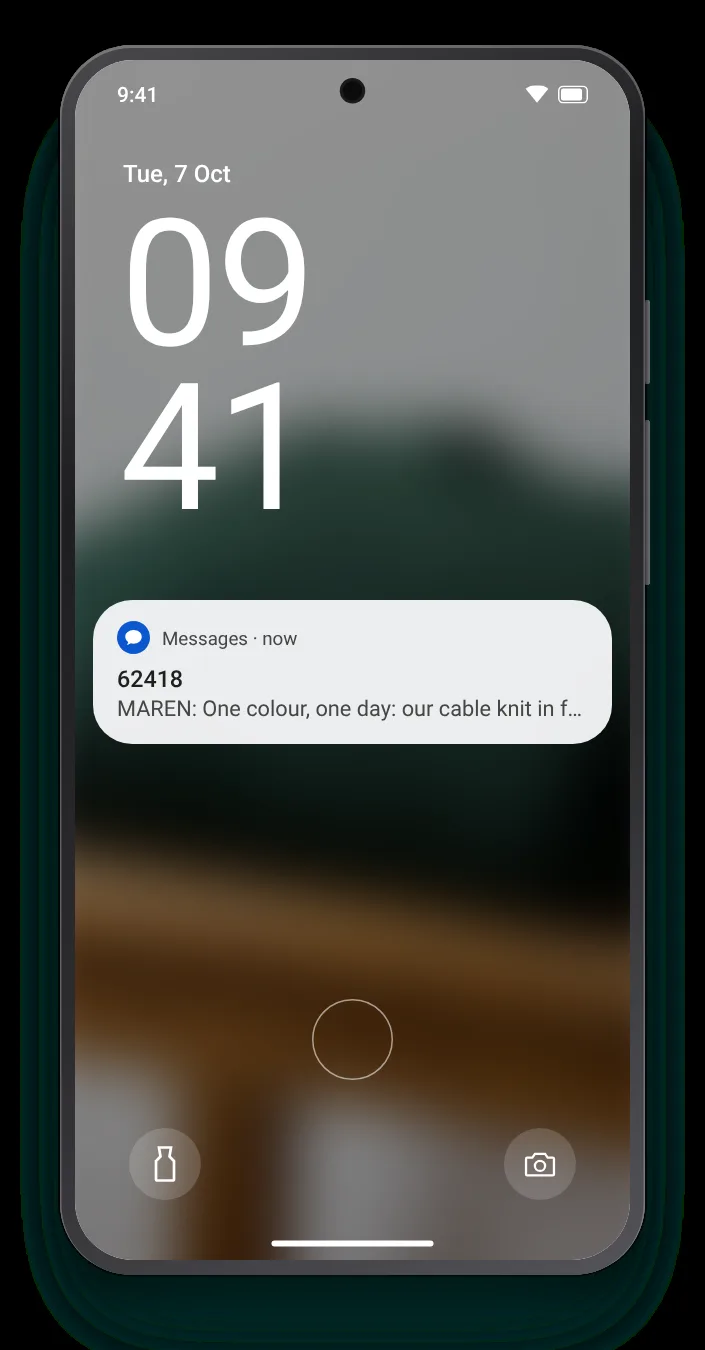
Most of these texts are judged from a notification, between two other alerts. The words that survive the cut need to say what is unusual about this Monday, before the percentage.
"Sold online today only" travels further than "30% off" in a crowded notification list.
A colour and a product name paint a picture; "selected styles" does not.
The address can sit at the end. It is the reason that has to fit in the preview.
Zefir writes the Monday sequence with your team, sends every text by the subscriber's local clock, and ties every resulting sale to the message that prompted it.
Request access See how it worksThe brand name, what is on offer, that it is online and ends today, a short link and an opt-out. Zefir puts all five into the texts it writes for you.
The Monday is online-only and falls on a workday, so the texts are timed around office hours and point to the website rather than to doors opening. Zefir schedules the two days as separate sends.
Early morning, lunchtime and early evening tend to suit a working day, always within 8am to 9pm in the subscriber's own zone. Zefir enforces those quiet hours for every number.
Yes, a reply with a budget or a category lets you answer with a short list instead of a full catalogue. Zefir writes the replies and sends them in the same thread.
Two is plenty for most lists, three at most, given the weekend before. Zefir skips buyers when the later texts go out.