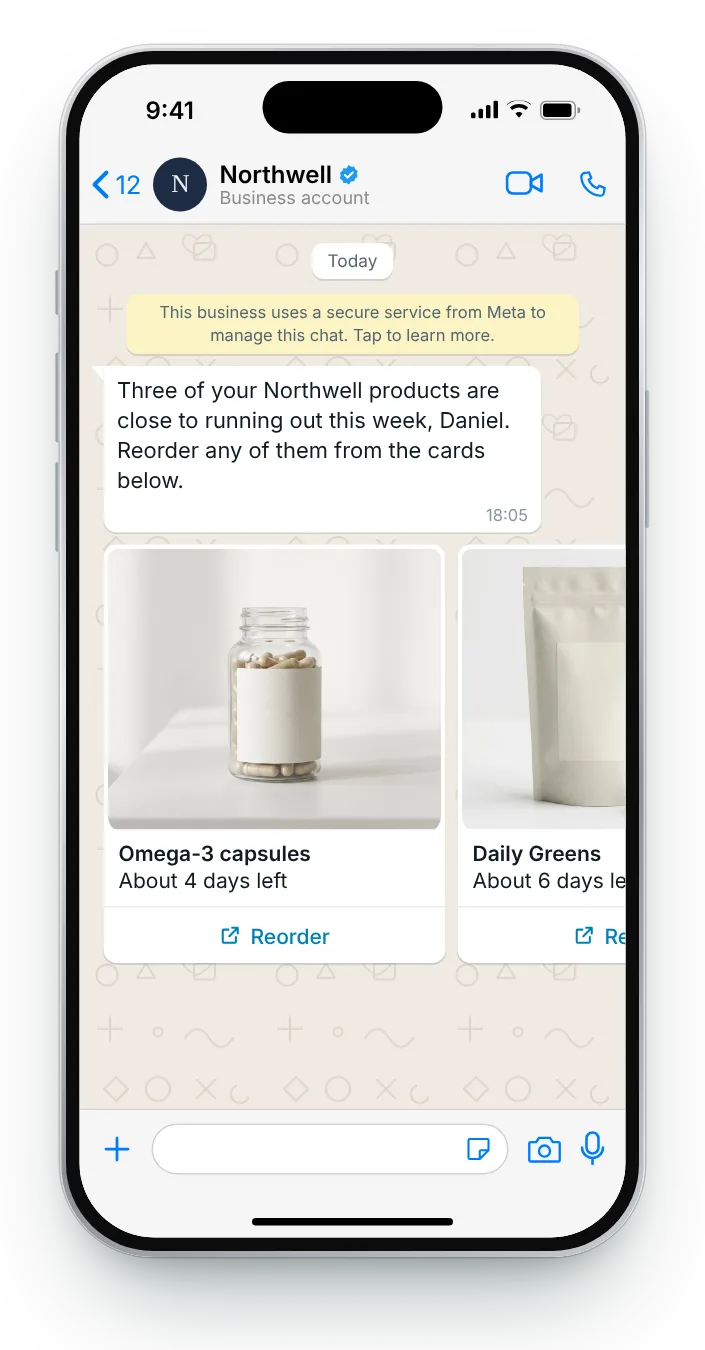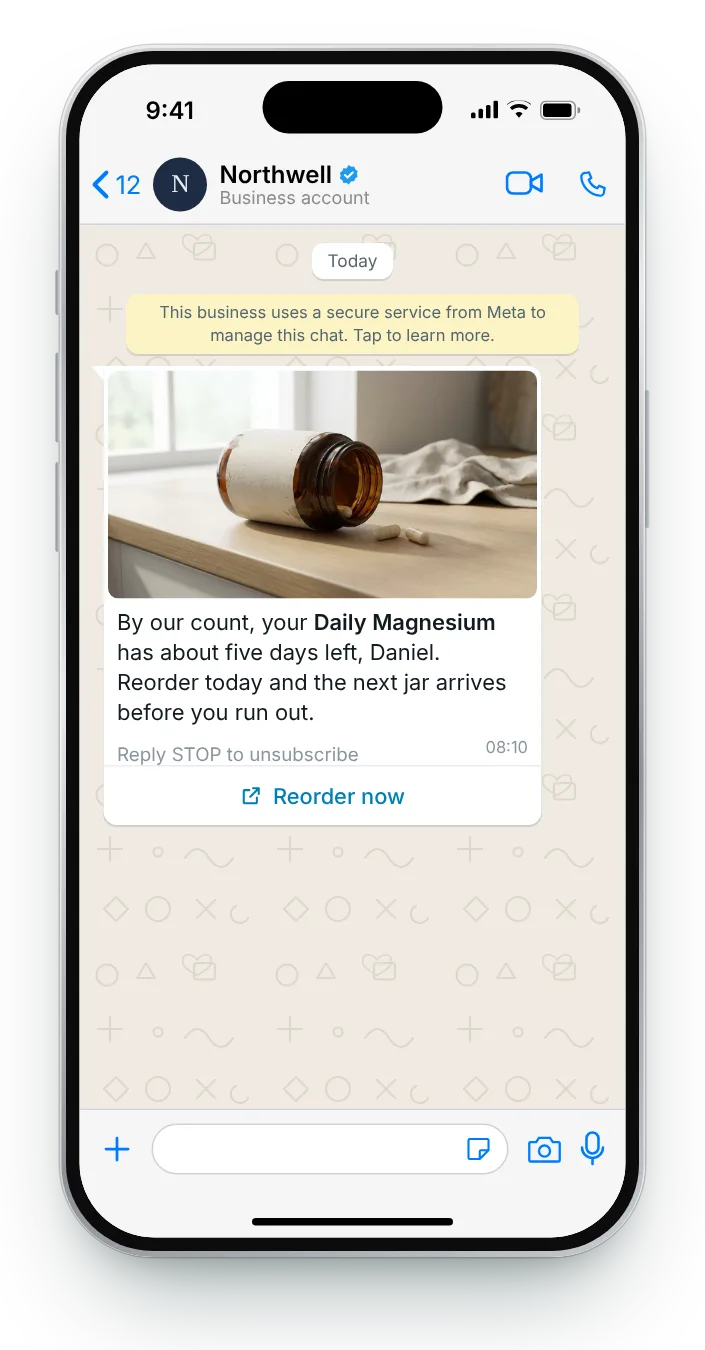
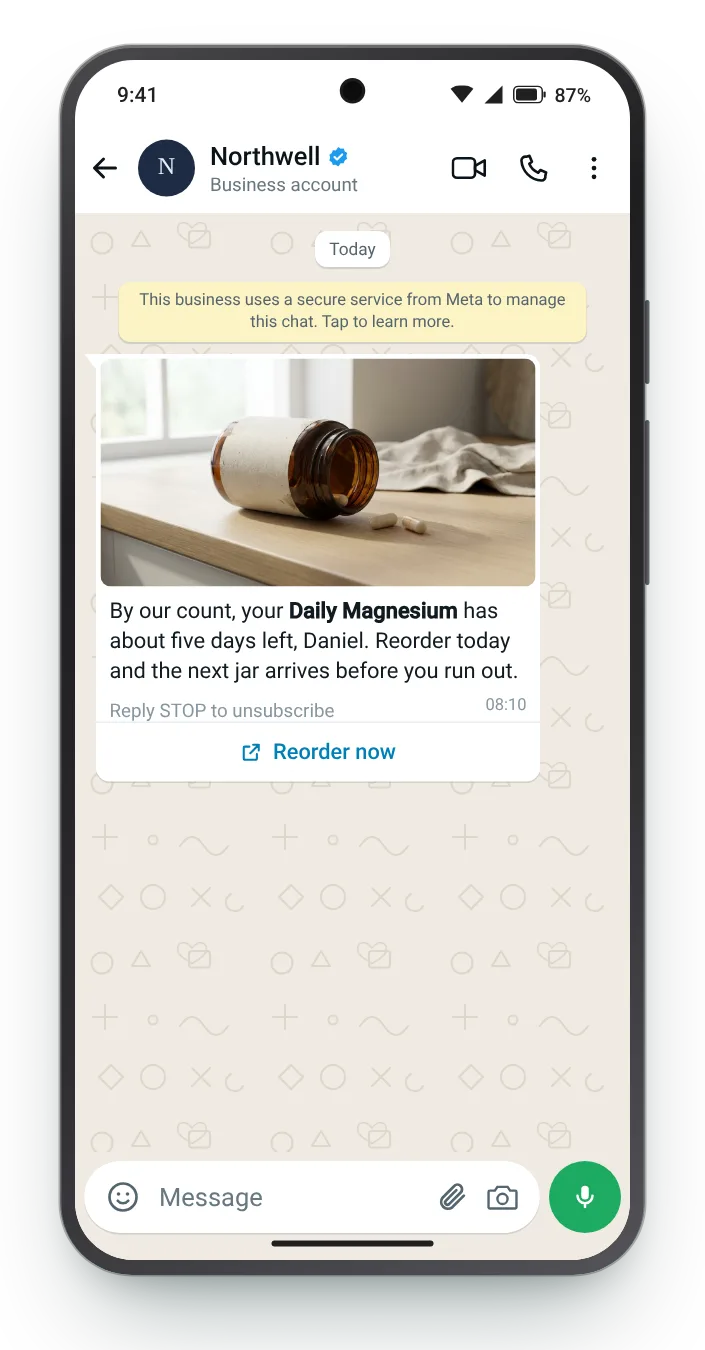

Five days before the jar runs out
Five days leaves time for delivery before the last capsule. Counting from the order date, not the calendar, makes the timing personal.
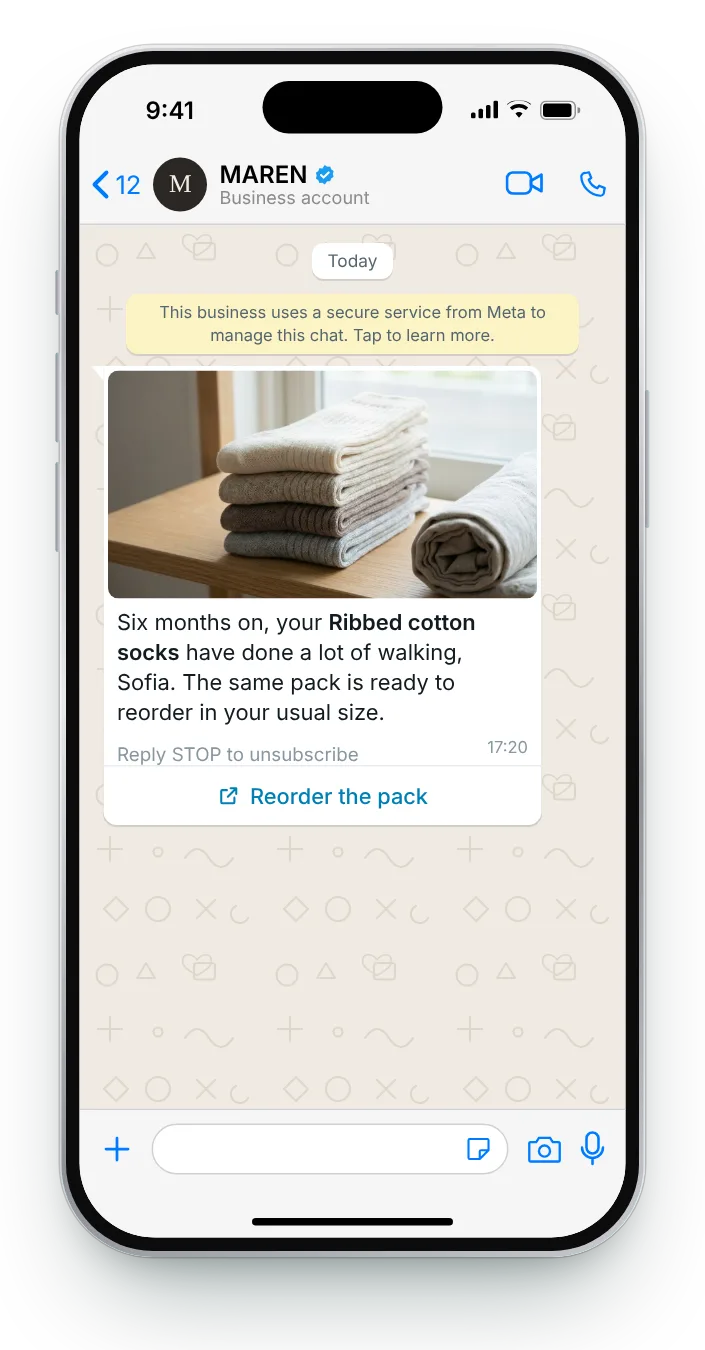
Reply STOP to unsubscribe
Button (link): Reorder now
A reorder reminder works when it arrives just before the last scoop, the last pump or the last pair. Too early and it is noise, too late and the customer has bought elsewhere. These seven are timed to the product, not the calendar.
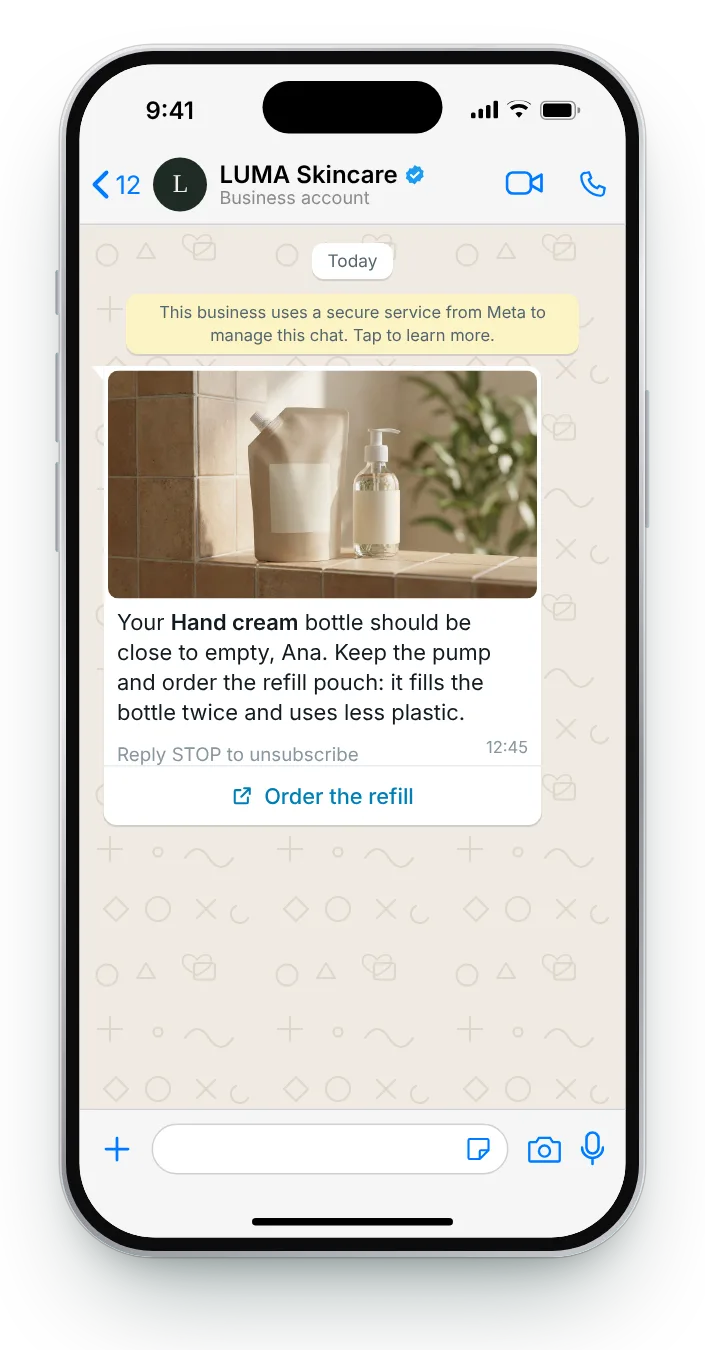
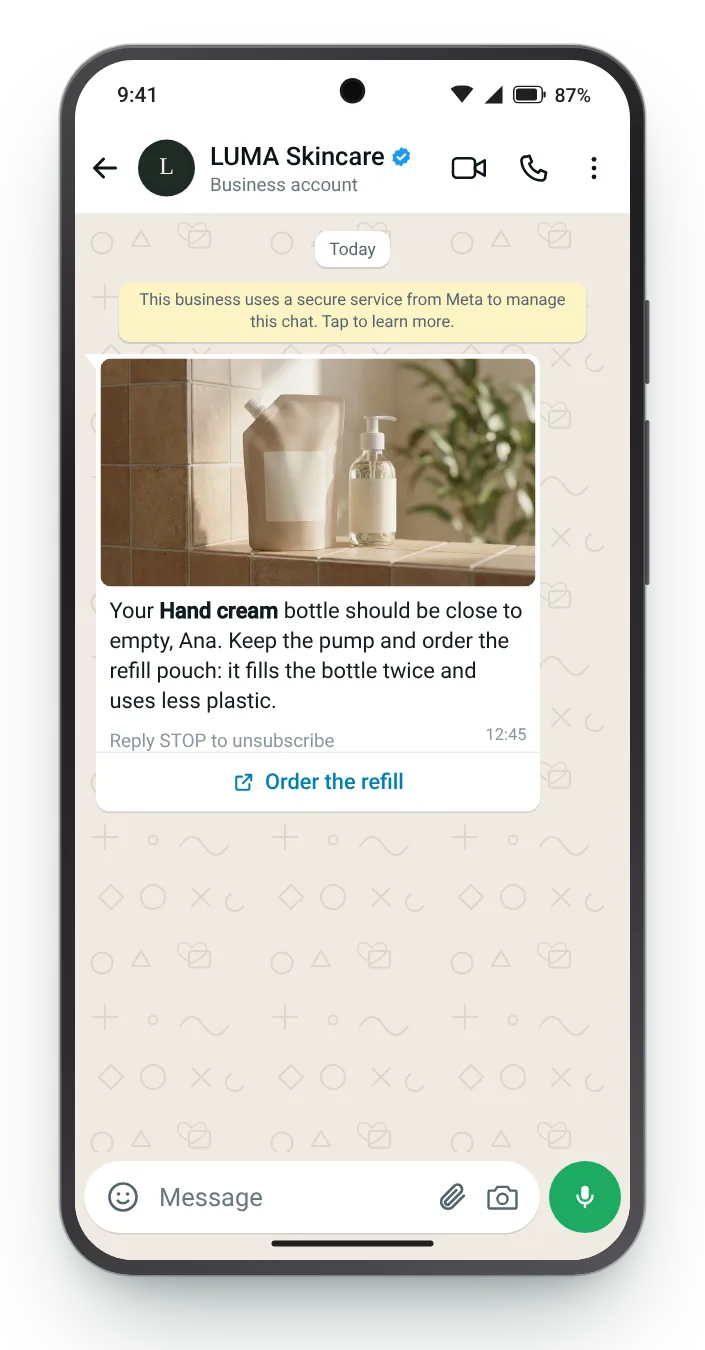
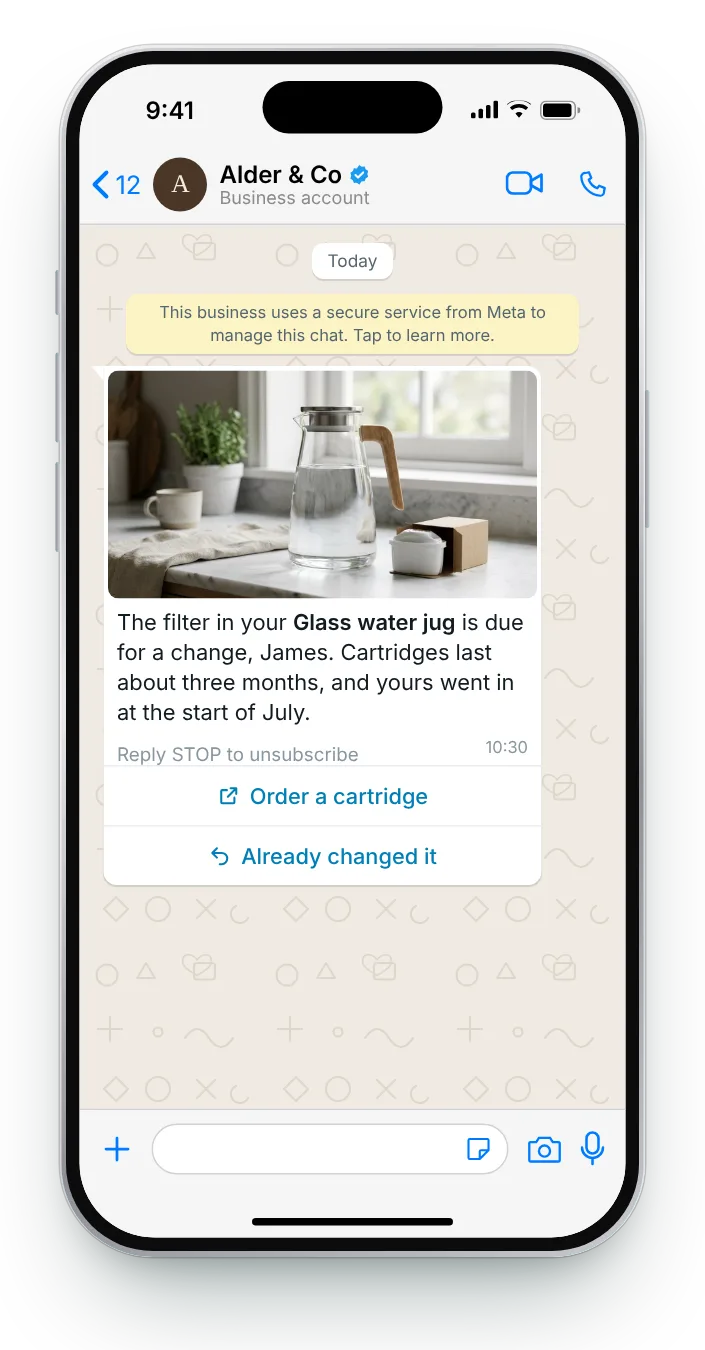
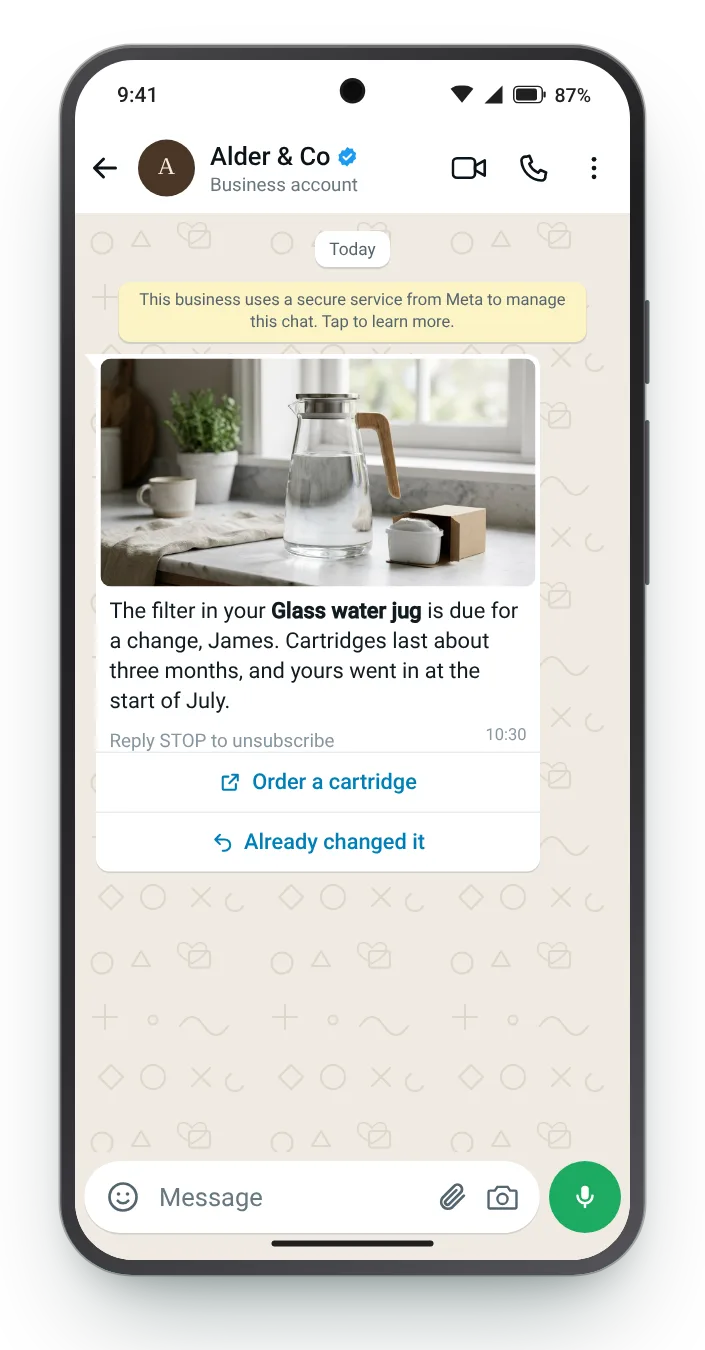
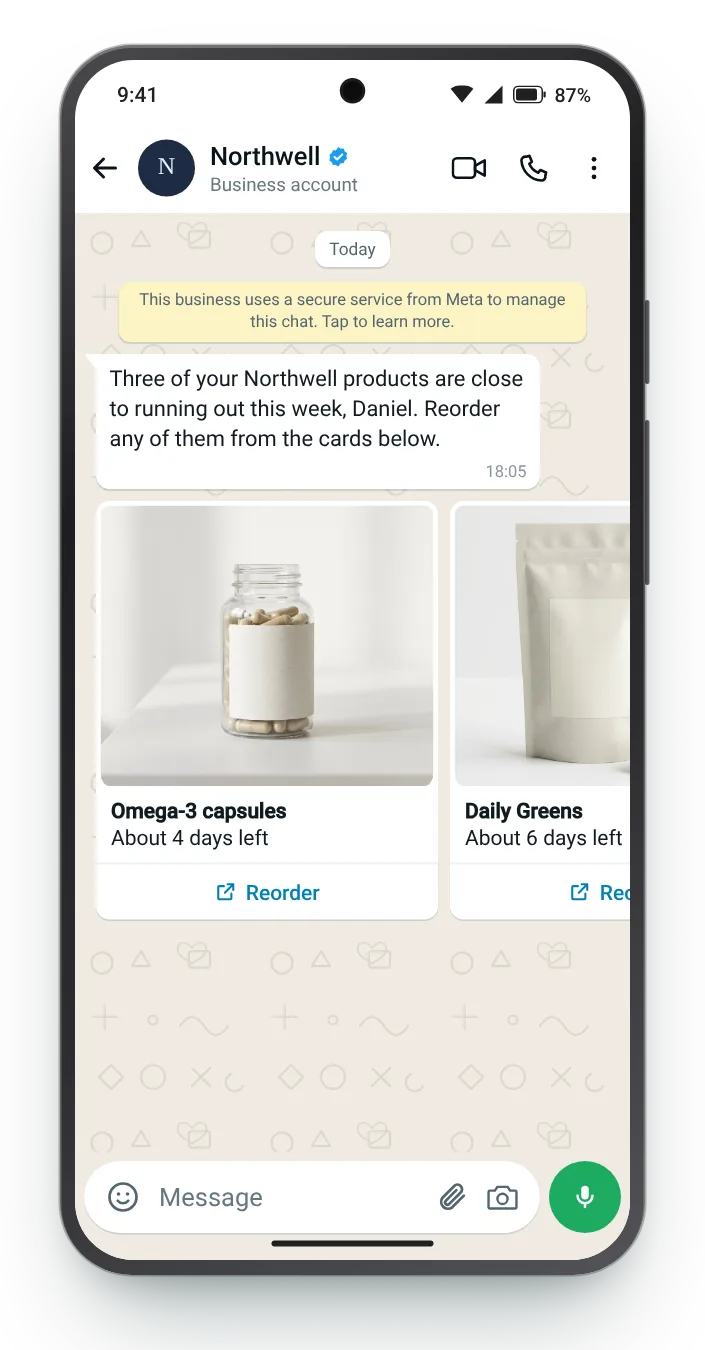
Supplements, skincare, home parts and everyday clothing all run out at different speeds. Every card gives the interval it is timed to, then the template fields, with a preview you can flip to Android.


Five days leaves time for delivery before the last capsule. Counting from the order date, not the calendar, makes the timing personal.


Usage varies, so the estimate will sometimes be early. A snooze button keeps the customer in control and gives you a better date for next time.


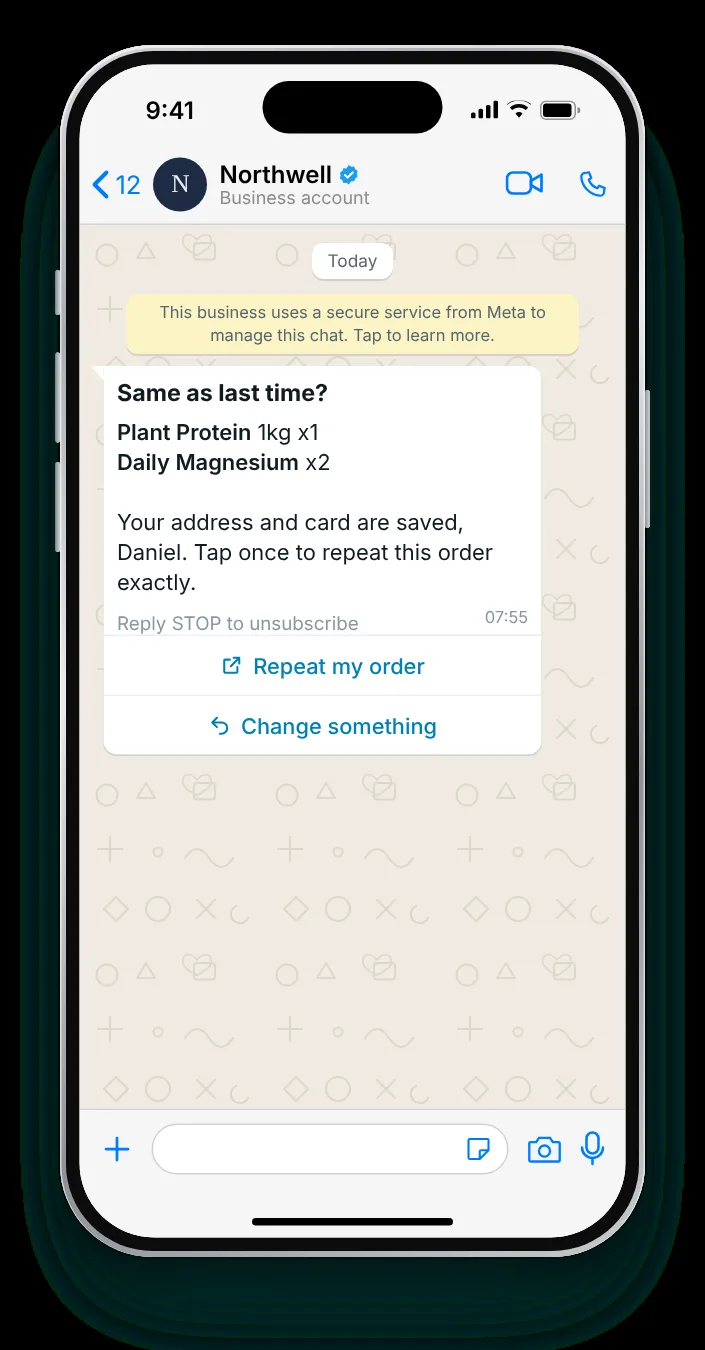
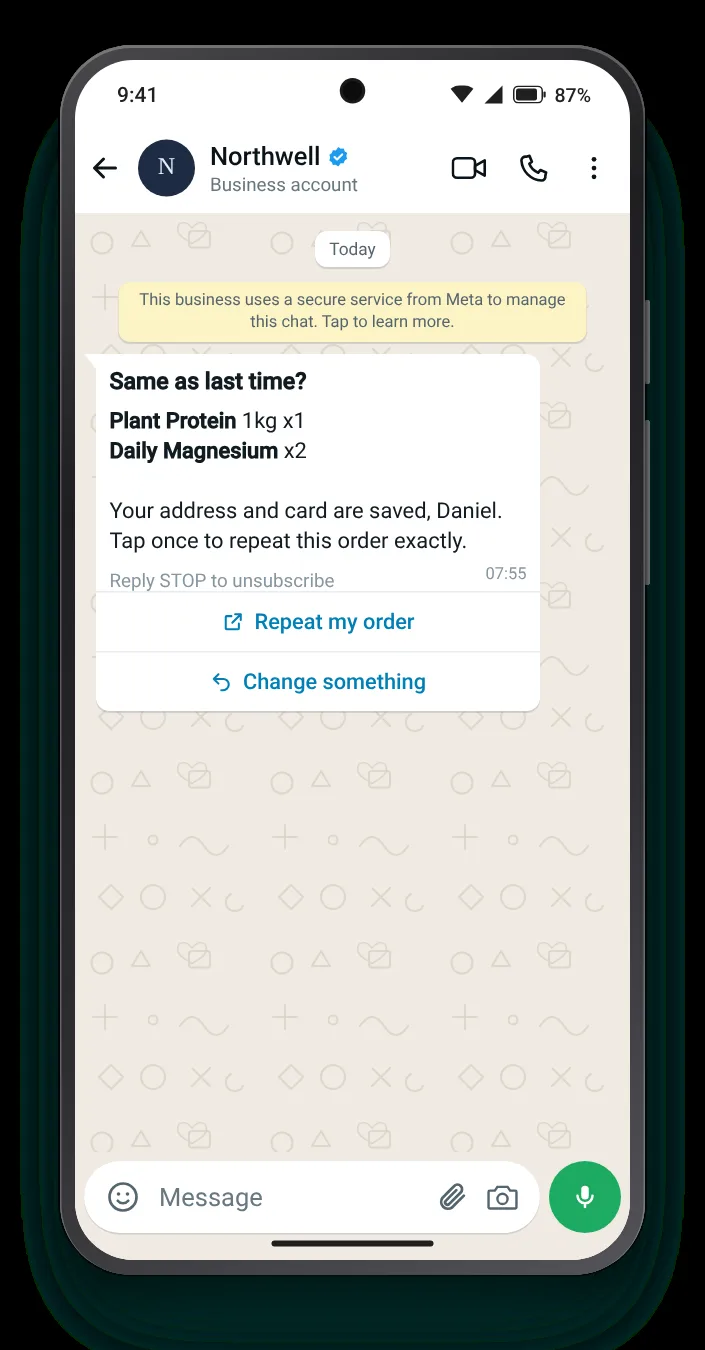
For regular buyers the decision is already made; the effort is in checkout. Listing the last order with the saved details reduces it to one tap.


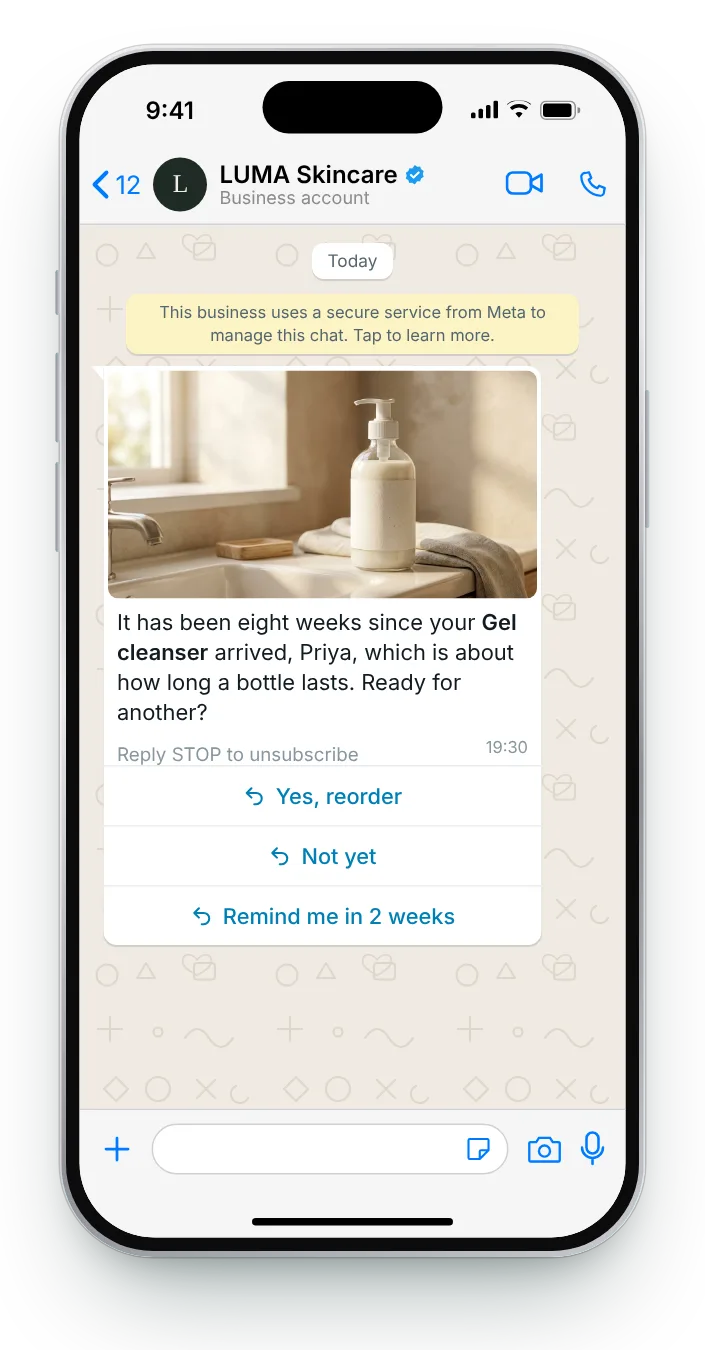
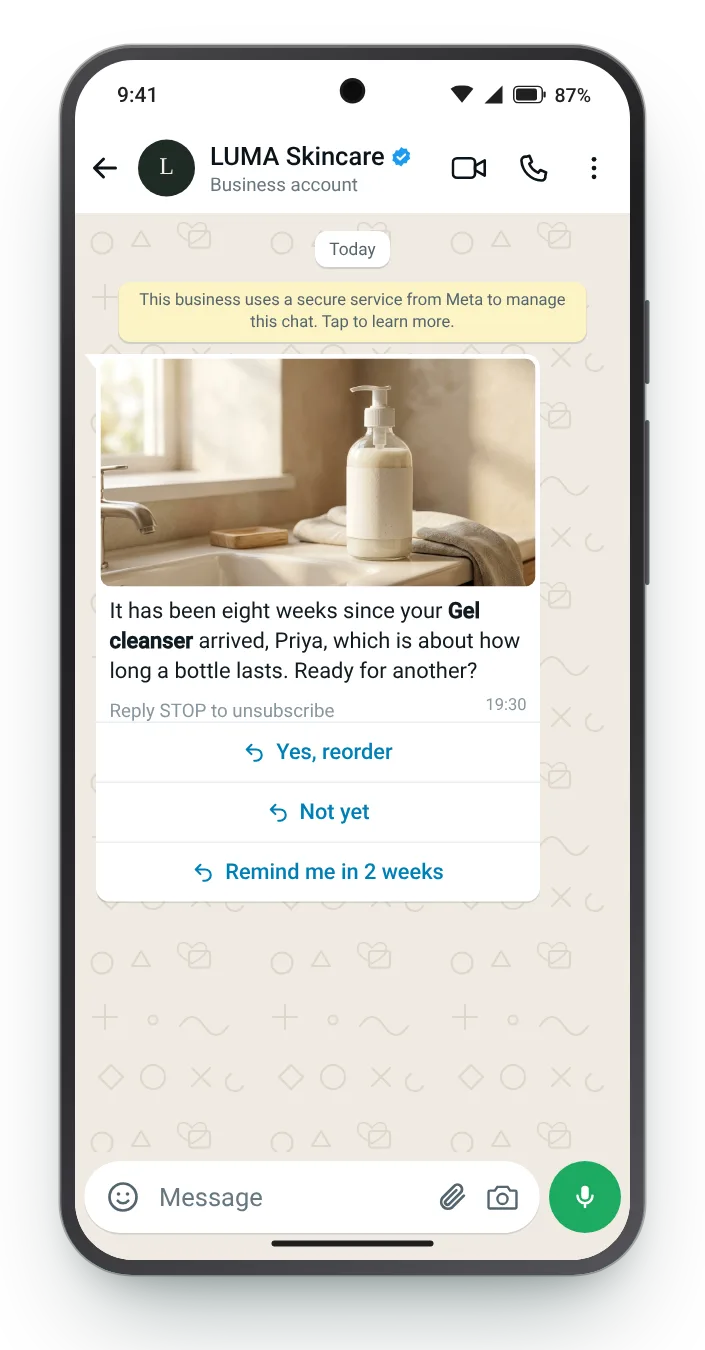
If the customer still has the pump, a refill is what they need. Suggesting it shows you are not just pushing another bottle.


Some products need a part replaced on a schedule the customer forgets. A reminder at the right interval is a genuine service, and it sells the cartridge.


Three separate reminders in a week would feel relentless. One carousel gathers them, and each card restocks a single product.


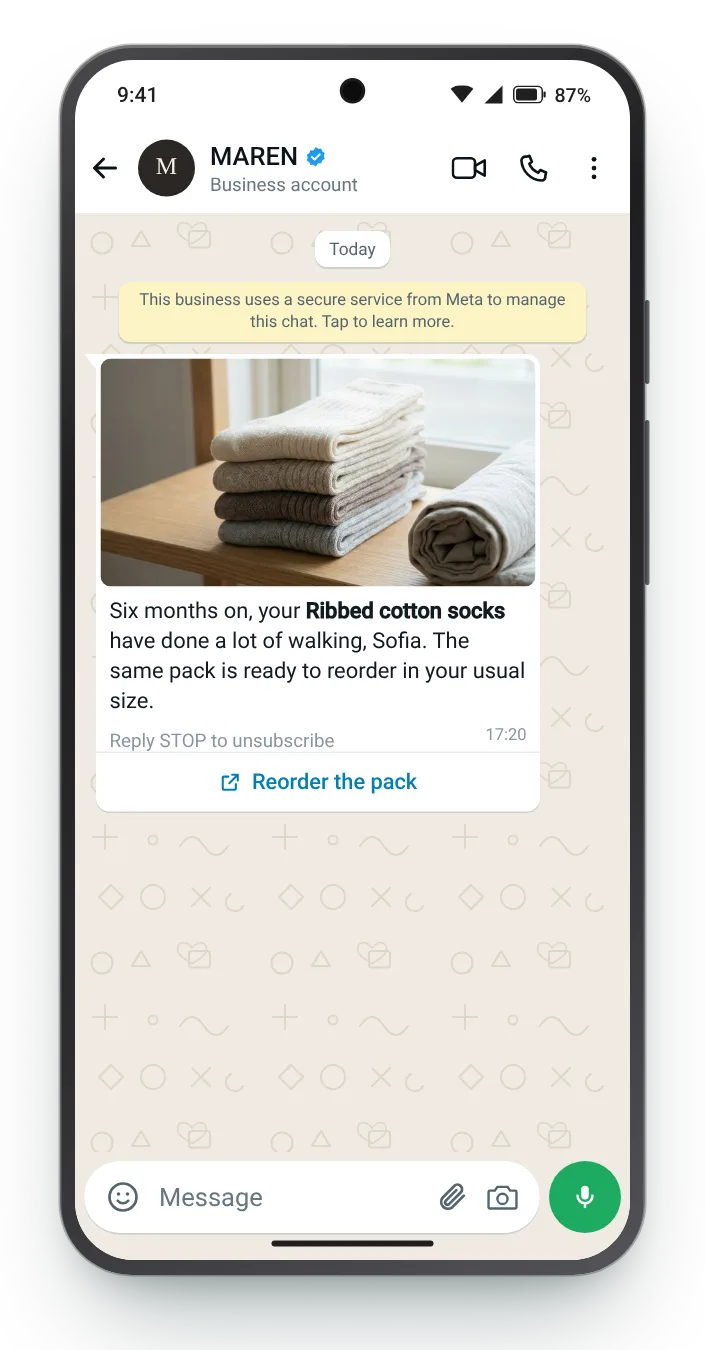
Fashion has replenishment too: the basics wear out. A reminder after six months fits how long socks and plain tees actually last.
Choose a product type, change the item and the interval in the text, and the chat updates live, with each field showing how much of Meta's limit it uses, and the checklist lists what usually gets a template rejected.
Use *asterisks* to bold the product. The preview fills in a sample customer for {{first_name}}.


The reminder is only as good as the estimate behind it. These four inputs turn a guess into a date.
Thirty capsules at one a day is thirty days. Start from the dose or the typical use per day.
Count from when the order arrived, and allow for delivery time on the next one.
A customer who has bought it twice has shown you their real interval. Use it instead of the average.
When someone taps 'not yet', push their next reminder back. Each answer sharpens the estimate.
Zefir drafts the reminders alongside your team and delivers each on WhatsApp at the interval that suits the product, with every repeat purchase attributed to the message behind it.
Request access See how it worksIt is a reminder sent shortly before a customer's product is likely to run out, with a button to reorder the same item. Zefir triggers them from your order data on WhatsApp.
Estimate how long the product lasts from the pack size and typical use, then adjust with each customer's own buying history. Zefir sends each reminder on the interval you set for each product.
Usually not; the customer needs the product anyway, and an easy buy-again button does the work. Zefir attributes each repeat purchase to the reminder, so you can test whether a code adds anything.
Give the customer a 'not yet' or 'remind me later' option and move their next reminder accordingly. Zefir builds those quick replies into each template.
It encourages a new purchase, so treat it as marketing and limit it to opted-in customers. Zefir checks the opt-in of every contact before a reminder goes.