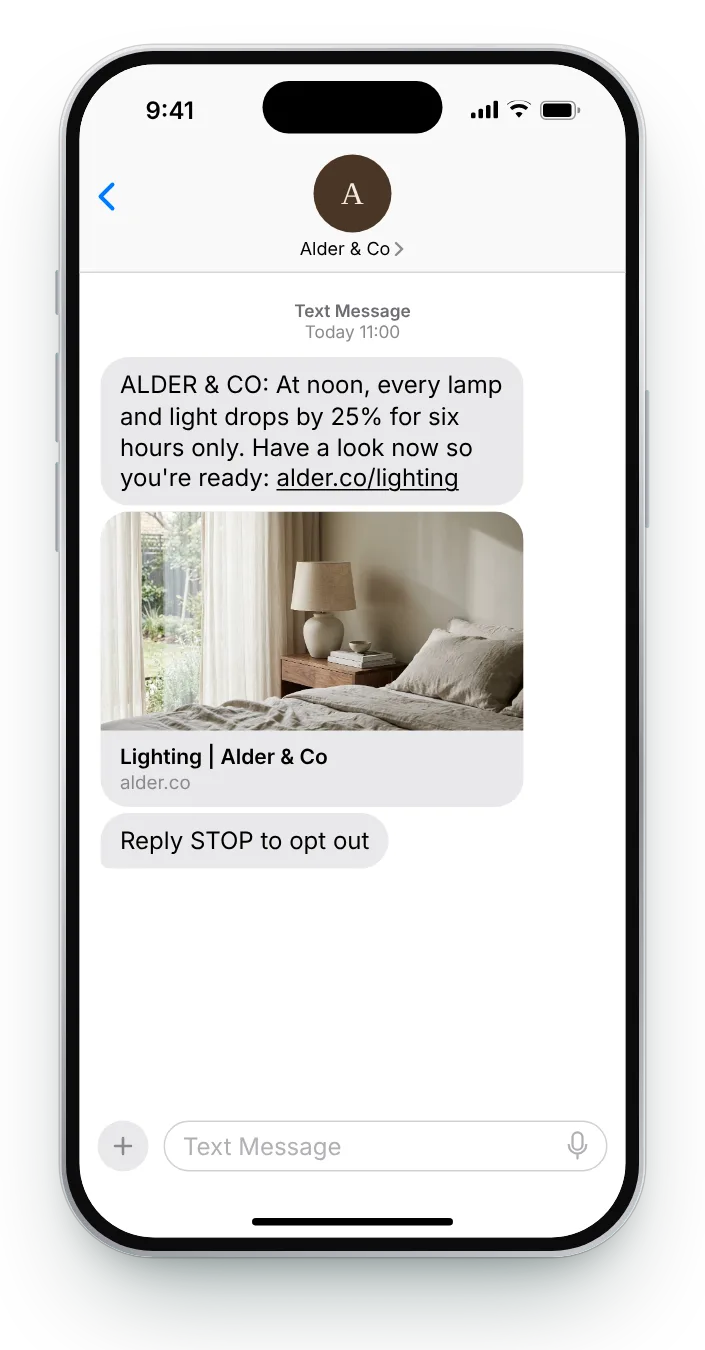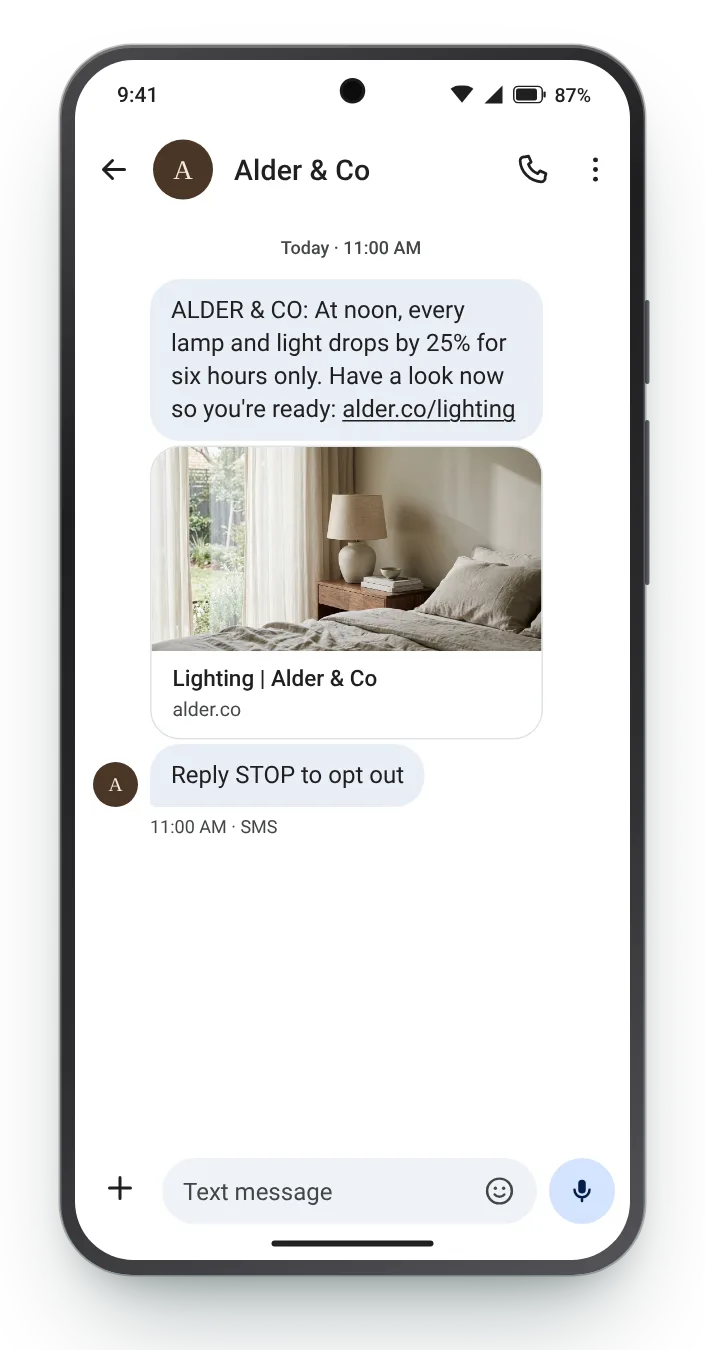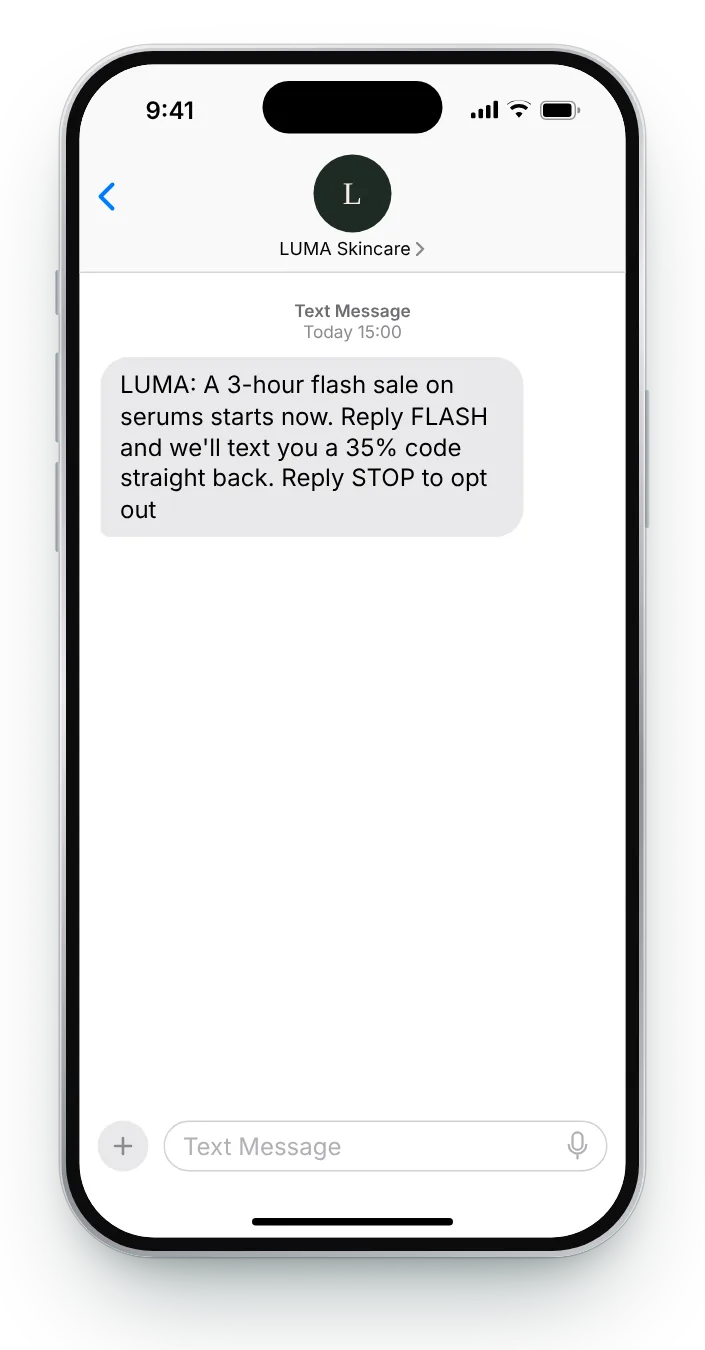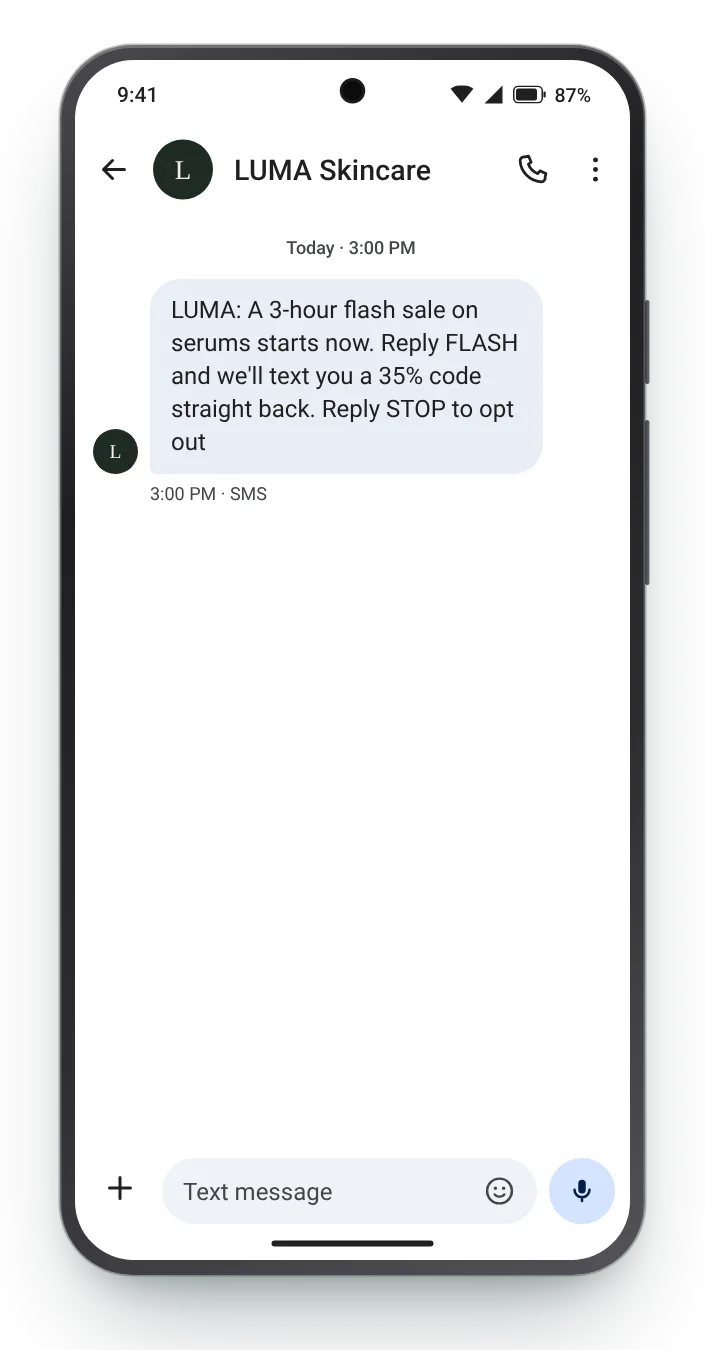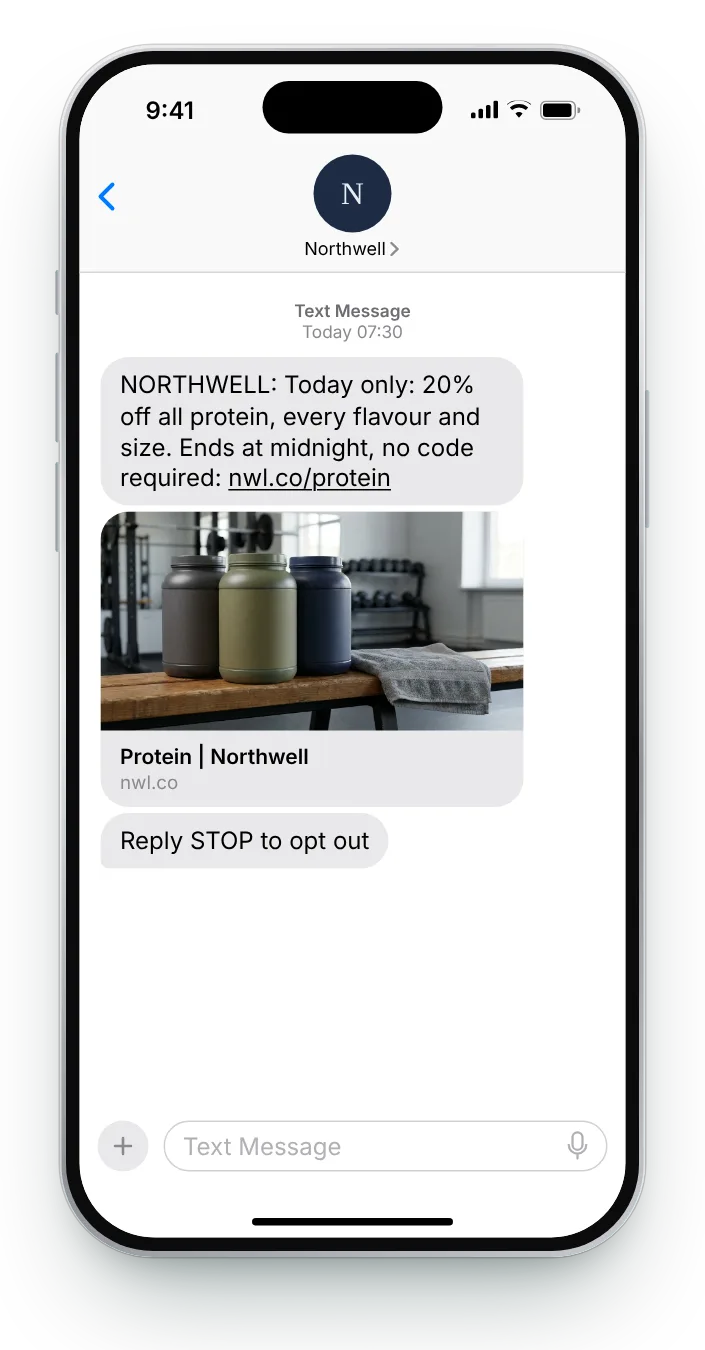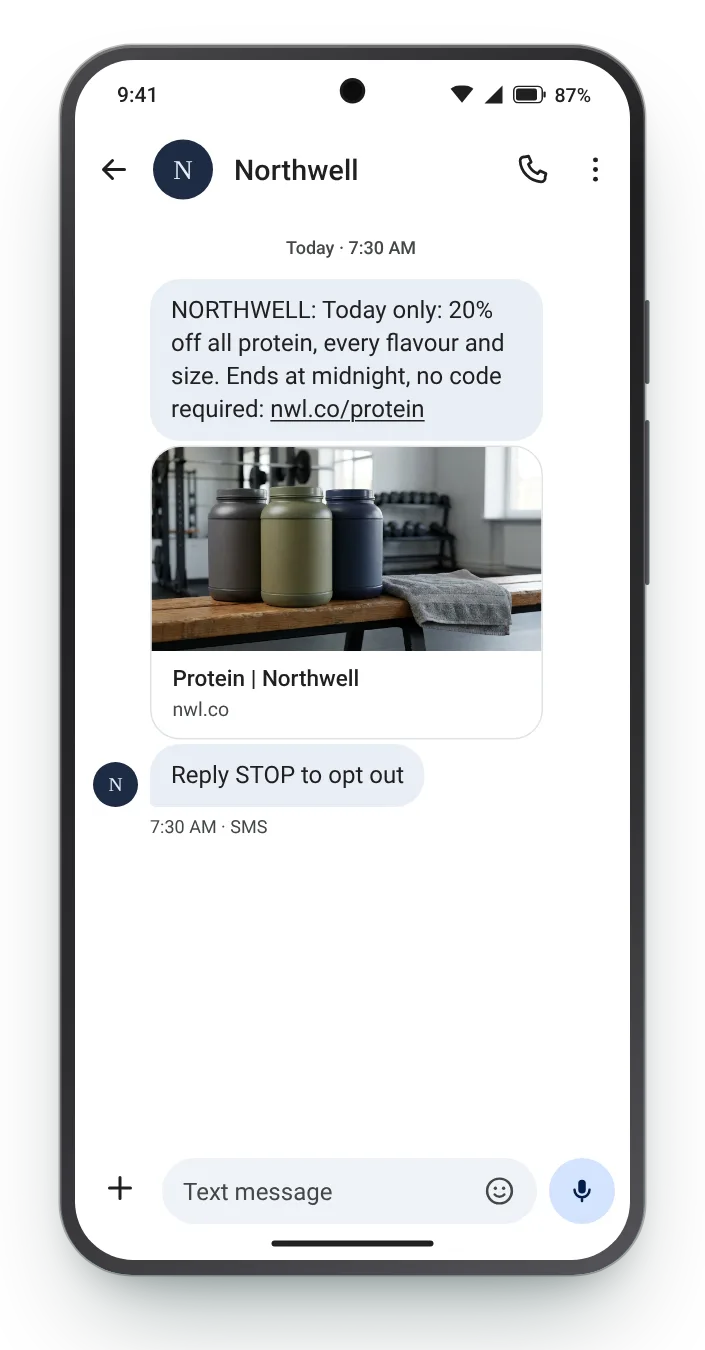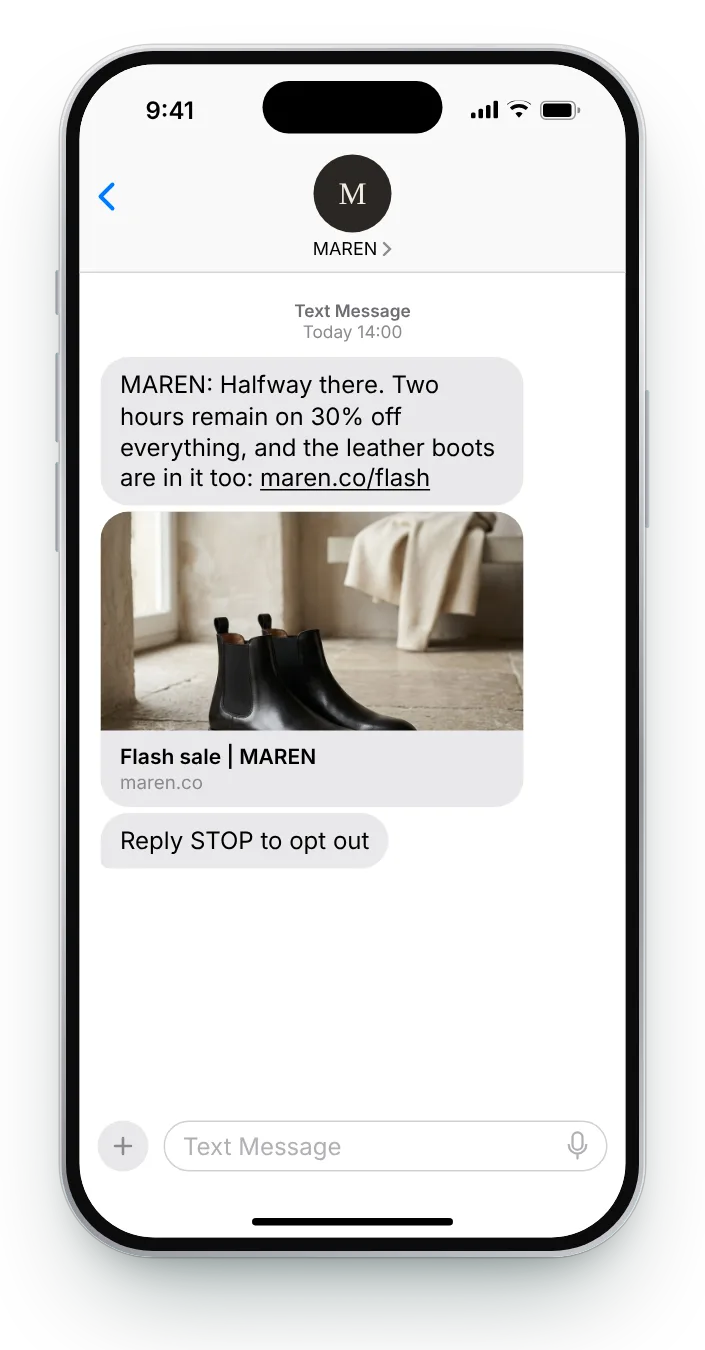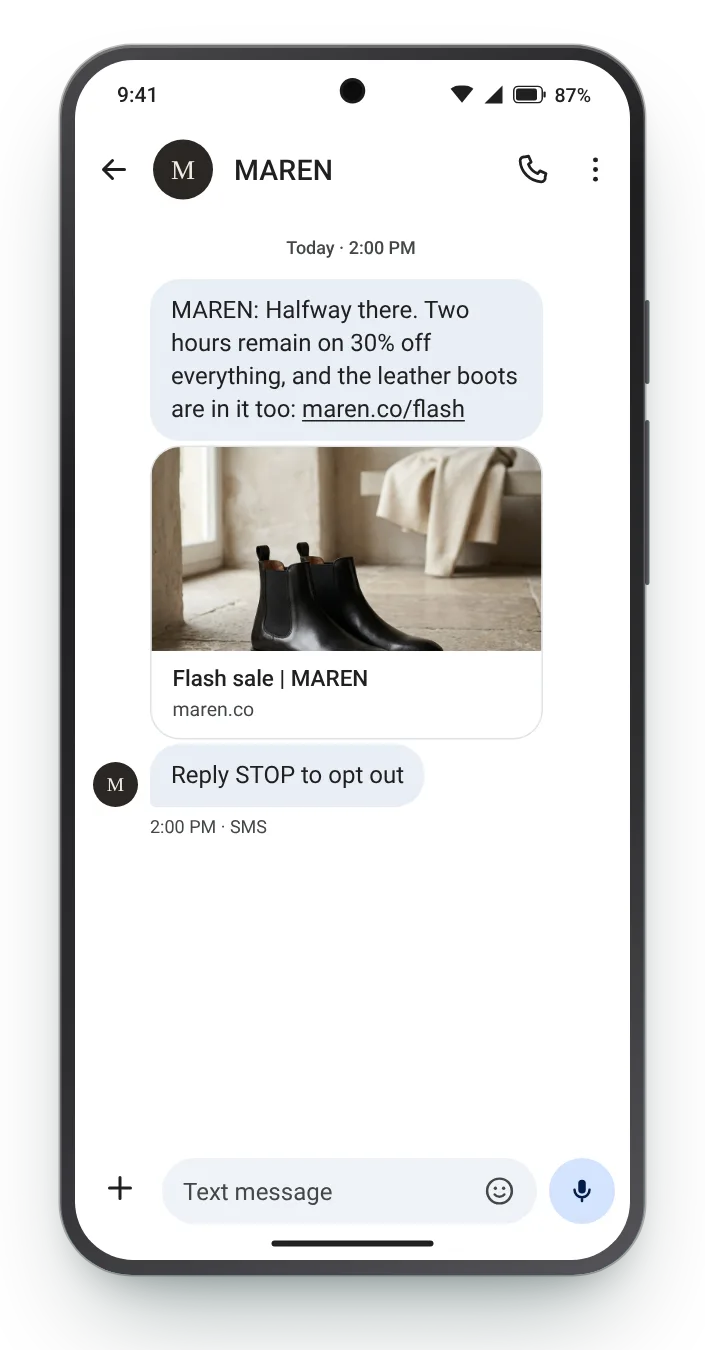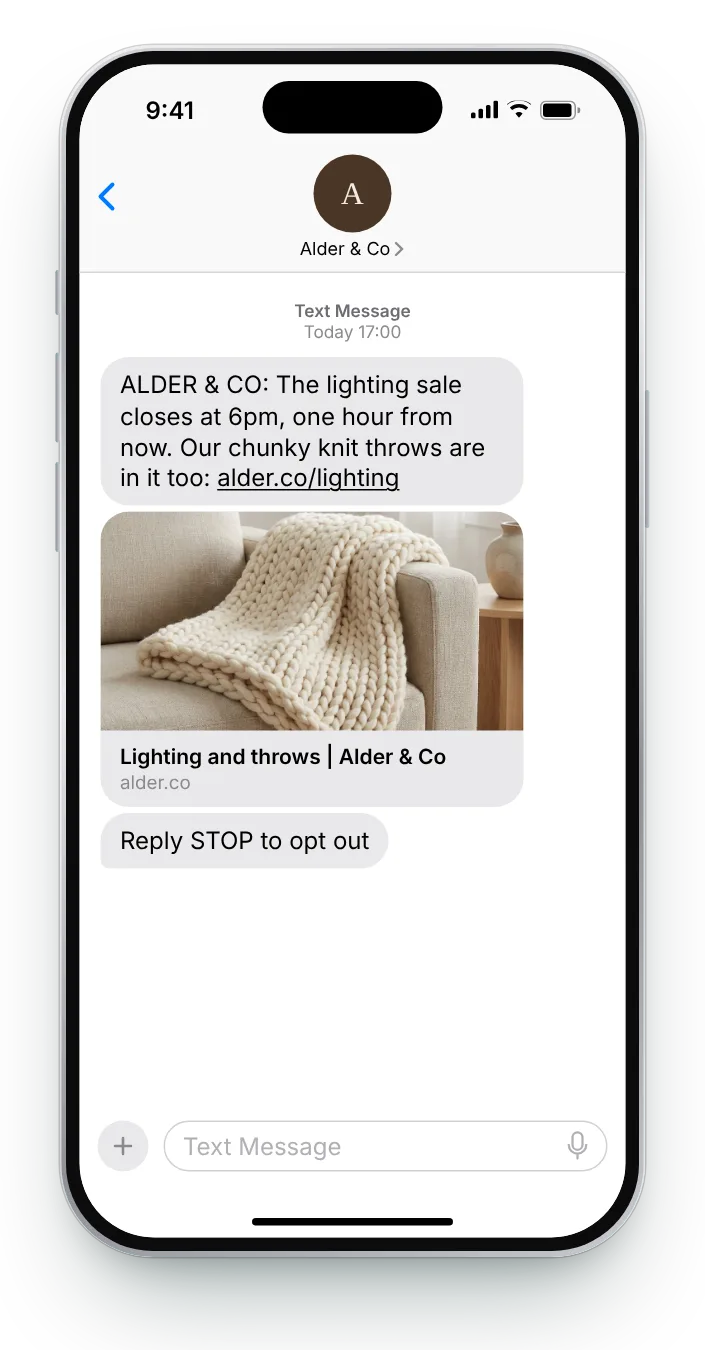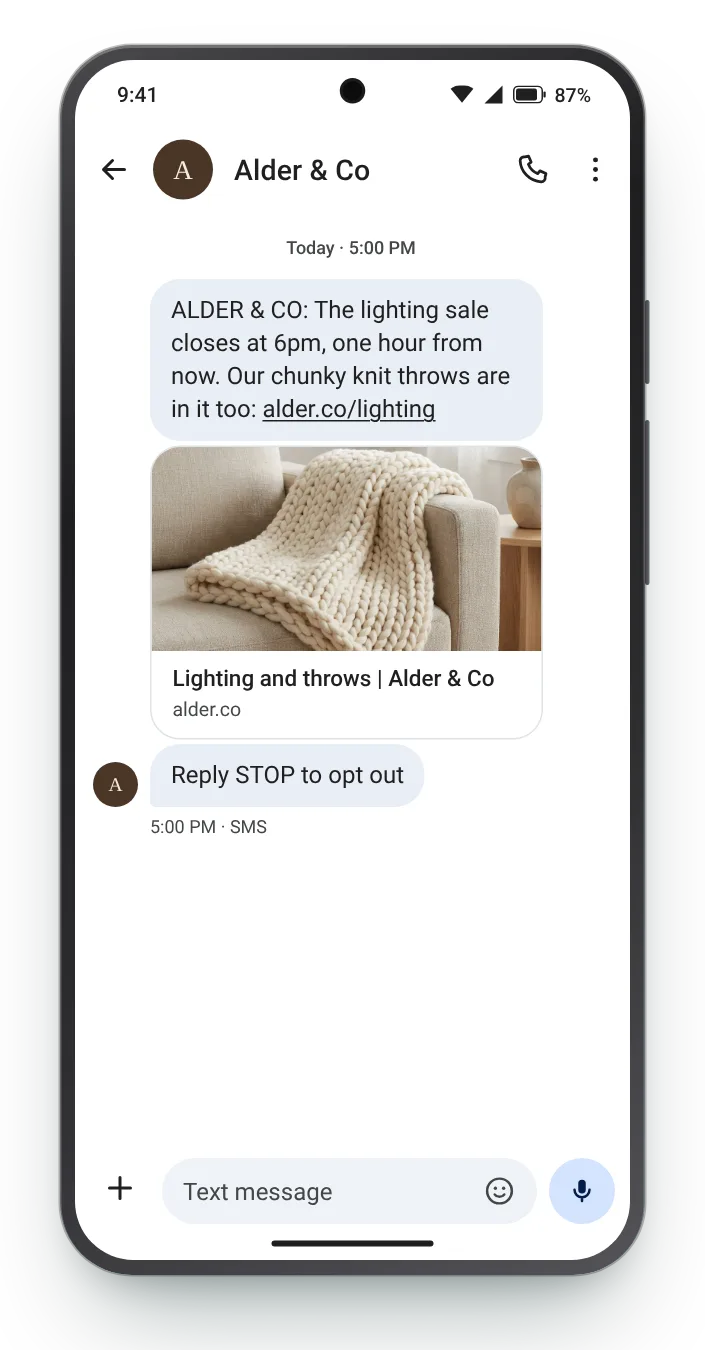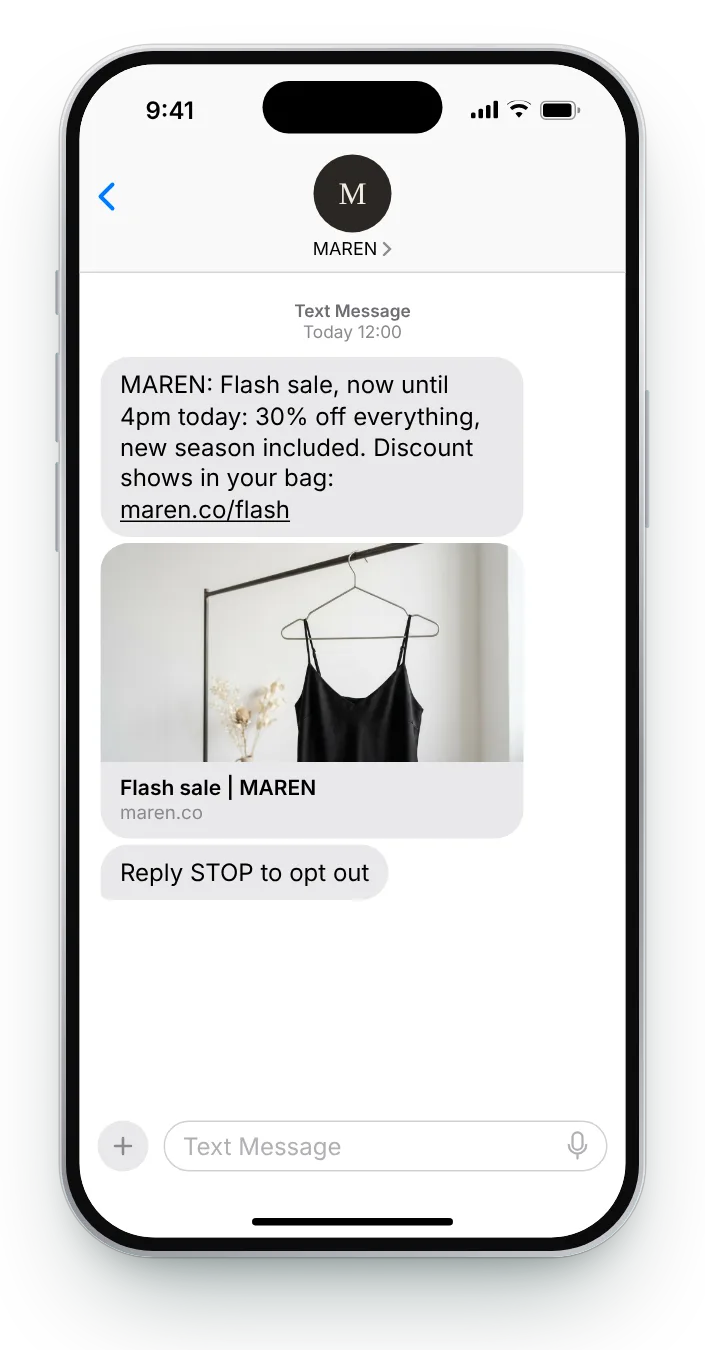
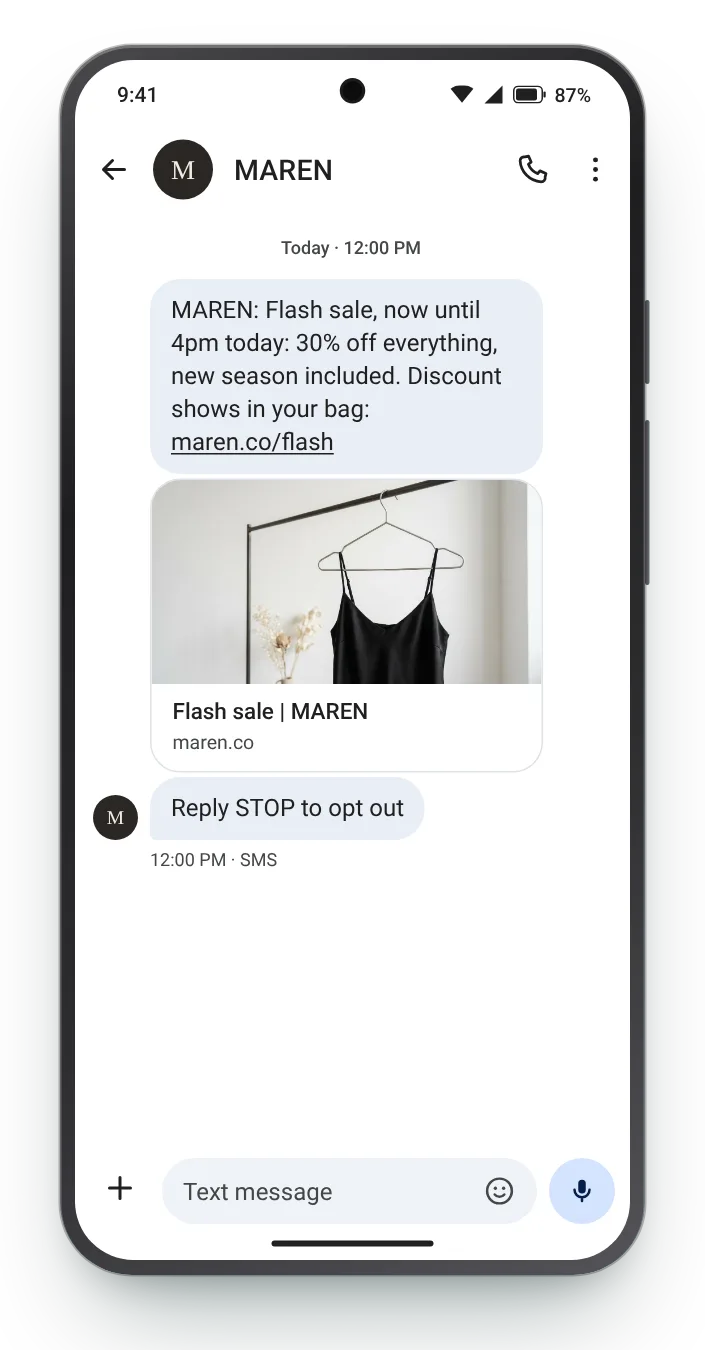

A four-hour sale, starting now
The length of the sale is the whole message. Putting the end time in the first sentence makes the urgency real and checkable.
A flash sale lives or dies by its clock. The texts have to say when it ends before they say anything else, and arrive while there is still time to act. Here are six for the different points of a short sale, each sized to one segment.
From the teaser an hour ahead to the final 60 minutes. Every card lists when it goes out, two wordings, long and short, and a preview you can switch between the two platforms.


The length of the sale is the whole message. Putting the end time in the first sentence makes the urgency real and checkable.


A short warning lets people be ready without giving them a day to forget. Naming the category tells them whether to care.


Asking for a reply filters for the people who want the deal, and every reply is a signal you can use for the next sale.


A whole day suits shoppers in different time zones and routines. Keeping it to one category protects the margin on everything else.


The midpoint reminder catches people who saw the first text and meant to come back. Sending it only to those who have not bought keeps it from annoying the rest.


A final-hour text is short by nature. The end time and one product are enough; anything longer slows the decision down.
Choose a text, set your own end time, percentage and link, and the chat preview refreshes on each keystroke. The meter turns dark the moment the text needs a second segment.


A reply keyword turns a broadcast into a two-way exchange. Only interested subscribers answer, and their answers tell you who to text next time.
FLASH, SERUM, LAMP: a word tied to the offer is easy to remember and easy to filter.
The code has to come back instantly, or the urgency you created works against you.
A reply-for-code mechanic suits a sale of hours; over days it loses its edge.
Zefir schedules every text in a flash sale, answers reply keywords with the right code, holds the reminders back from people who already bought, and attributes each order to its text.
Request access See how it worksAnywhere from a few hours to a single day; the shorter the window, the more the end time matters in the text. Zefir schedules the launch, reminder and last-call texts around whatever window you choose.
Usually two or three: the launch, a midpoint reminder and a final-hour text for those who have not bought. Zefir removes buyers from the later texts automatically.
Not necessarily; applying the discount automatically removes a step, while a reply-for-code mechanic helps you find engaged subscribers. Zefir supports both and replies to keywords instantly.
Late morning and early afternoon suit most stores, as long as every text lands inside quiet-hour limits. Zefir enforces quiet hours in each subscriber's own time zone.
Yes, with a separate link or keyword per text. Zefir links each sale back to its source text.