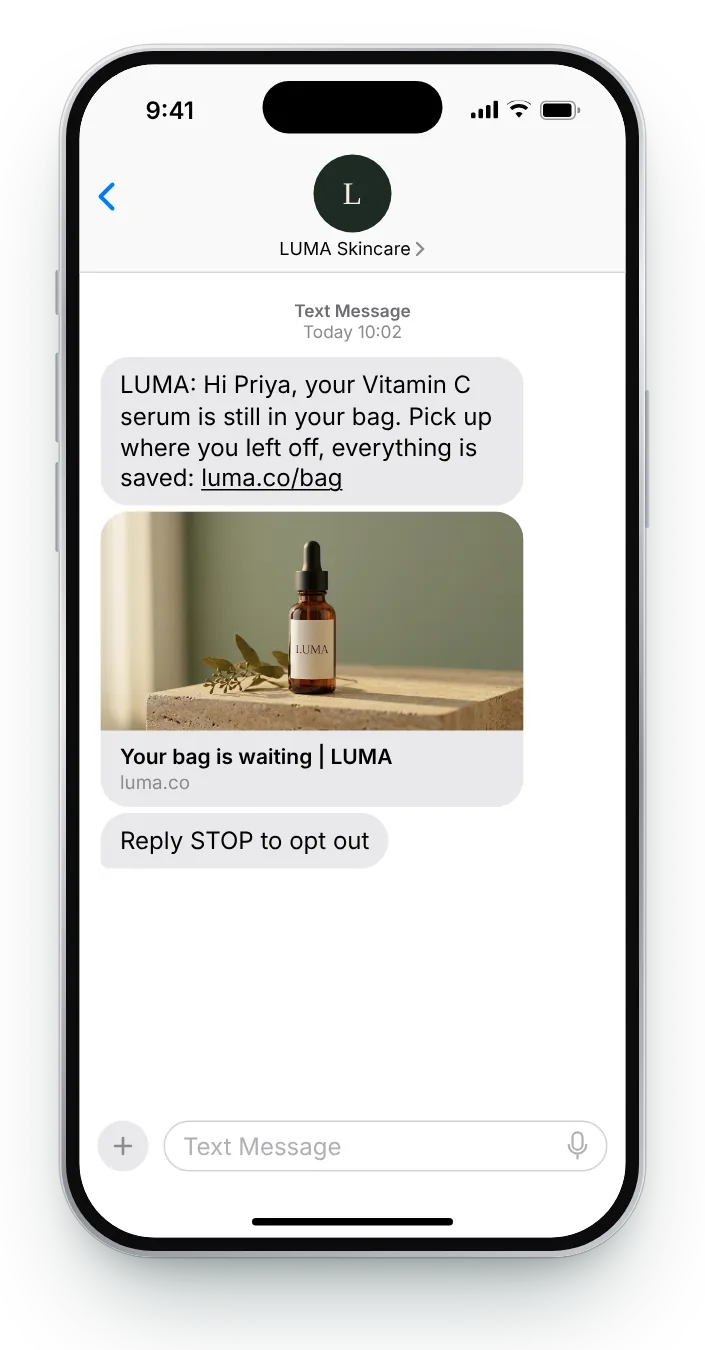
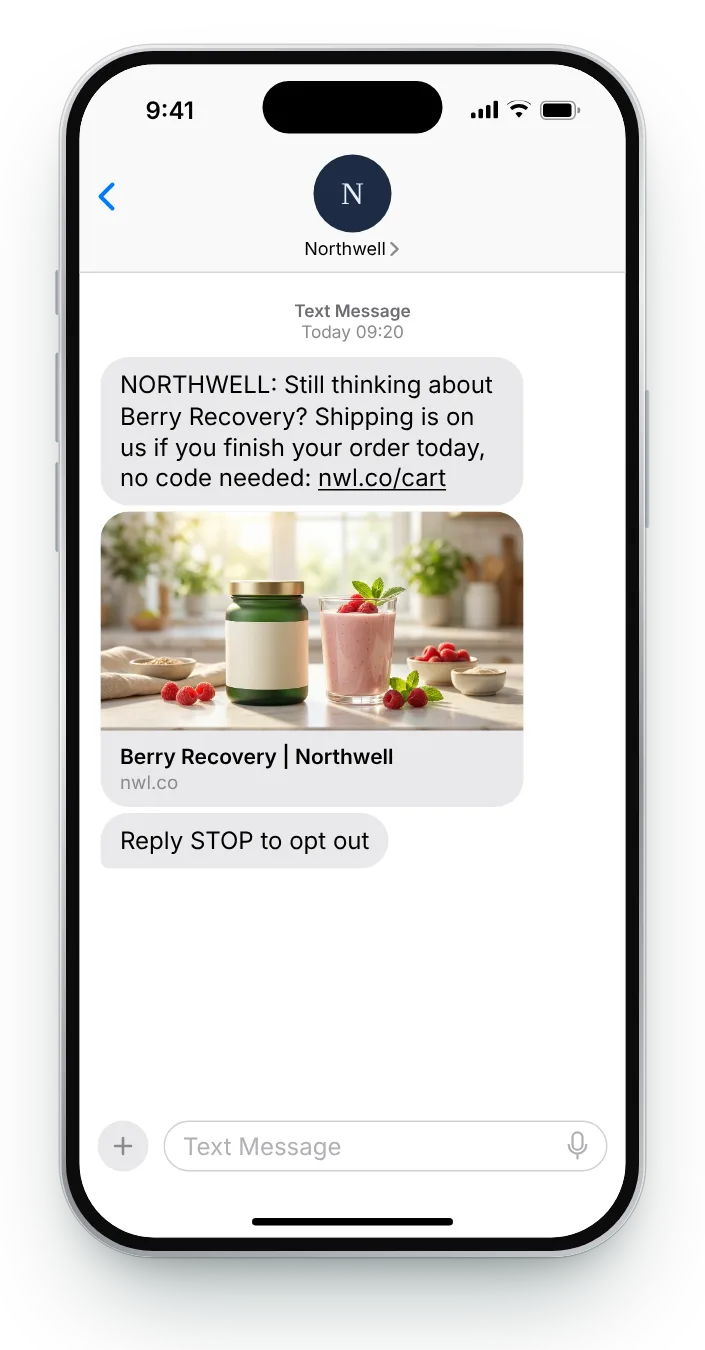
The one-hour nudge
Lead with the link back, not a discount. Save any incentive for a later message, so you are not paying for orders that would have come anyway.
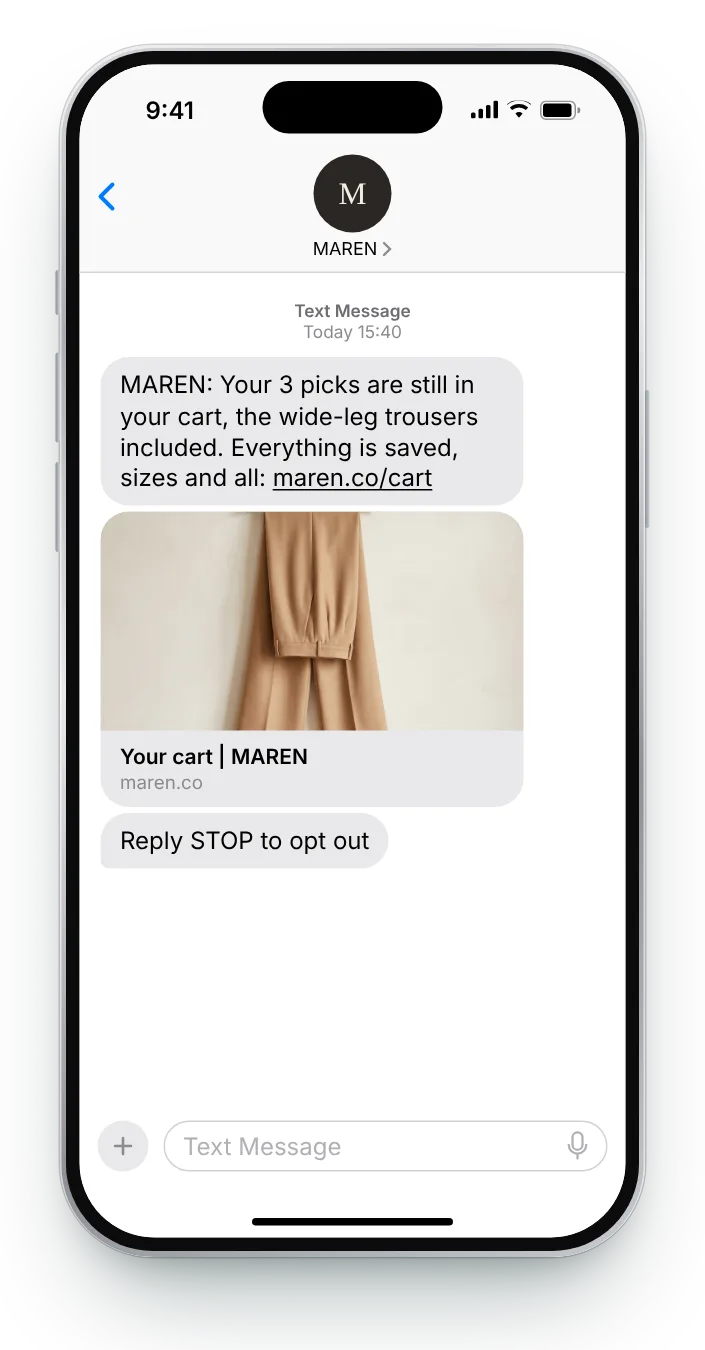
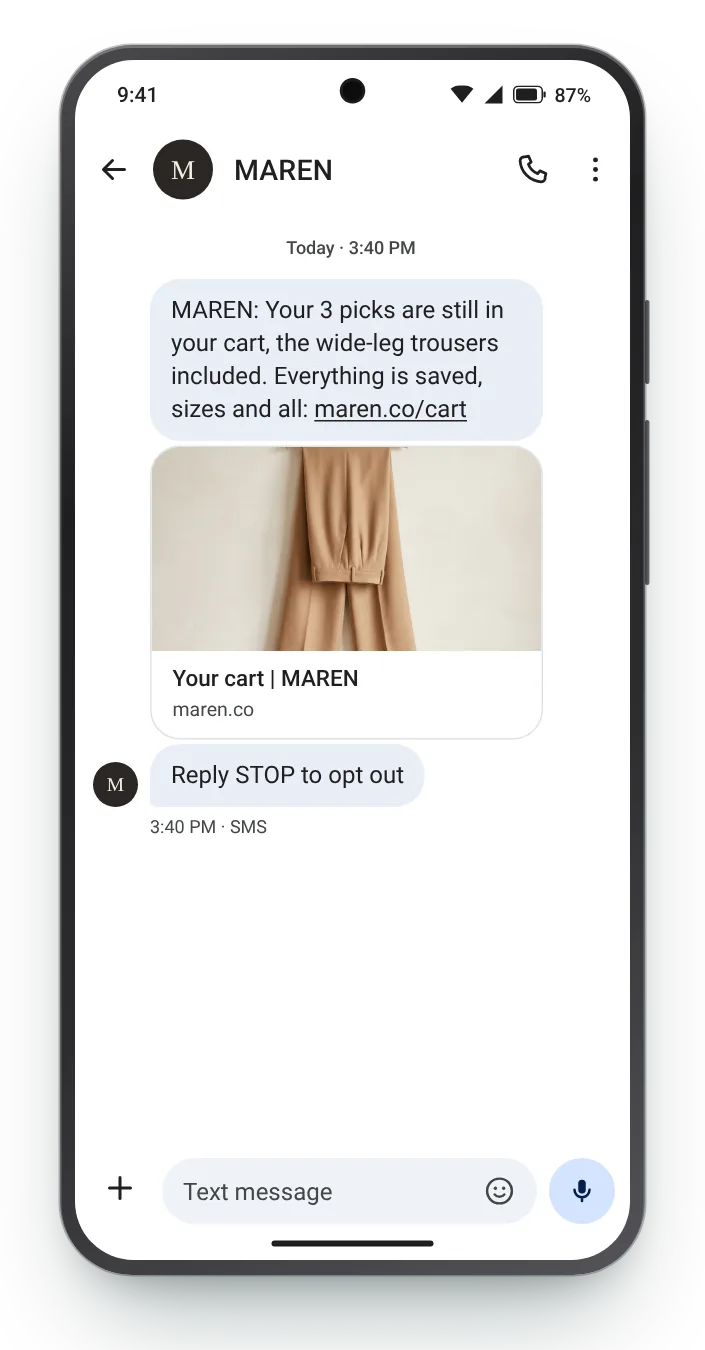
What should a text say an hour after someone leaves a full cart, and what should it say three days later? These abandoned cart SMS templates answer both, mostly without a discount, in under 160 characters each and with a preview on both phone platforms.
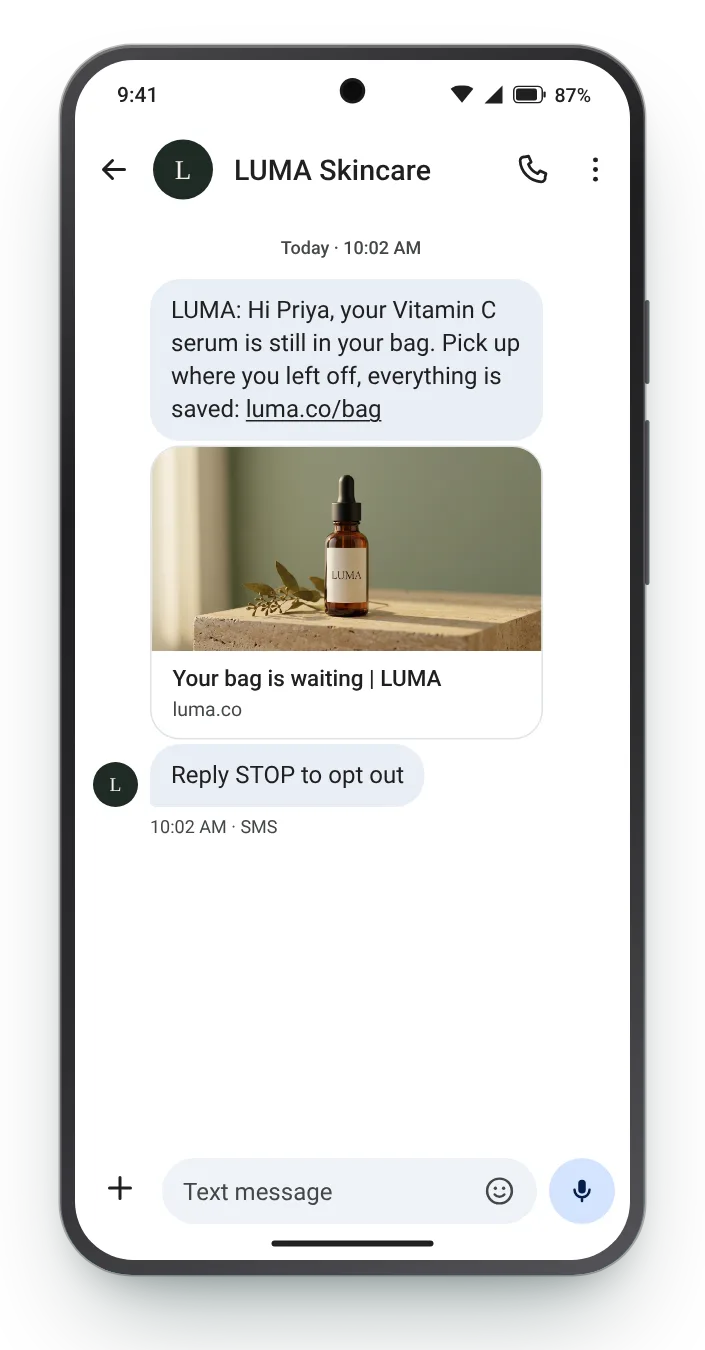
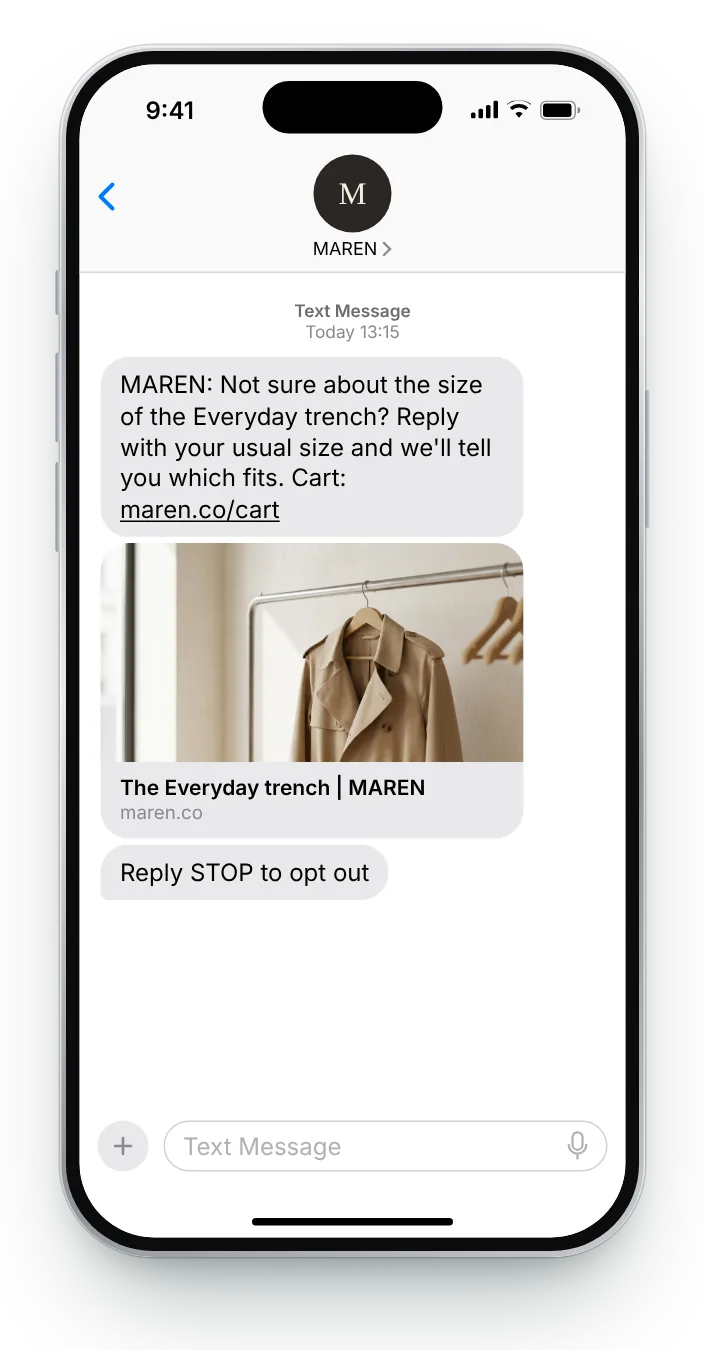
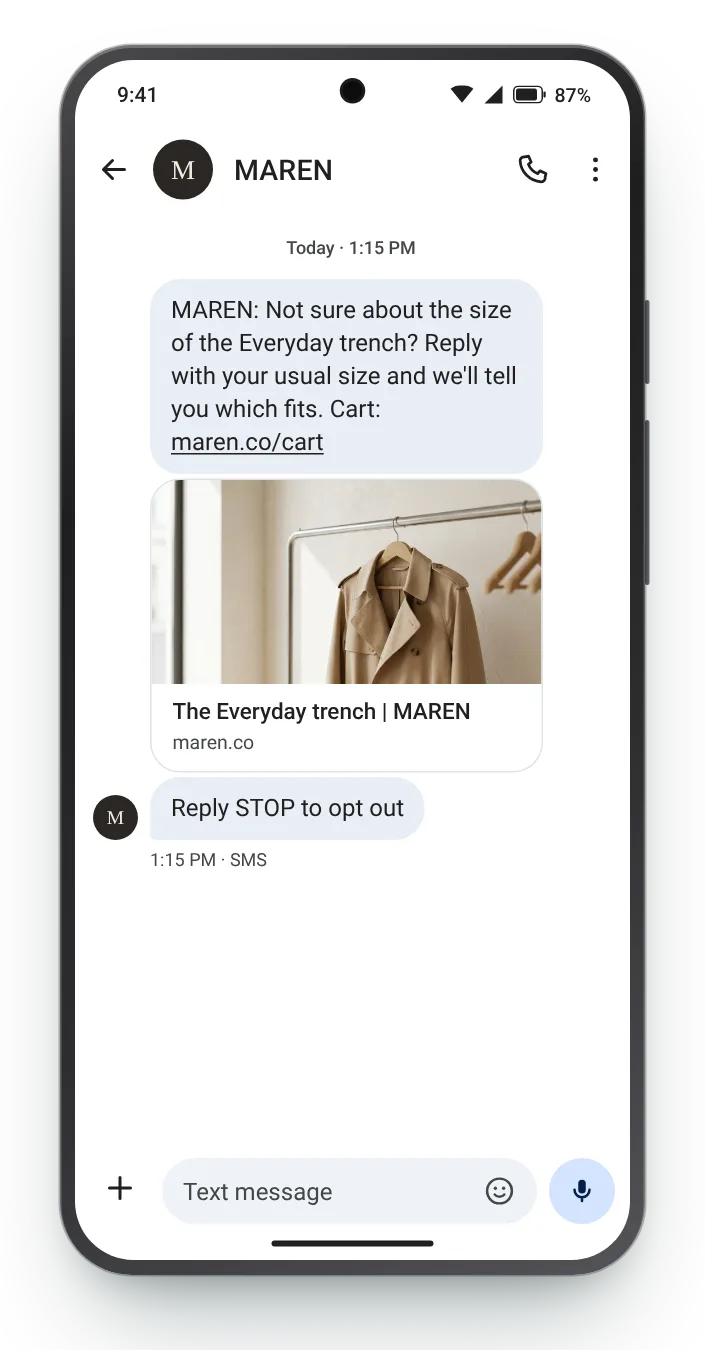
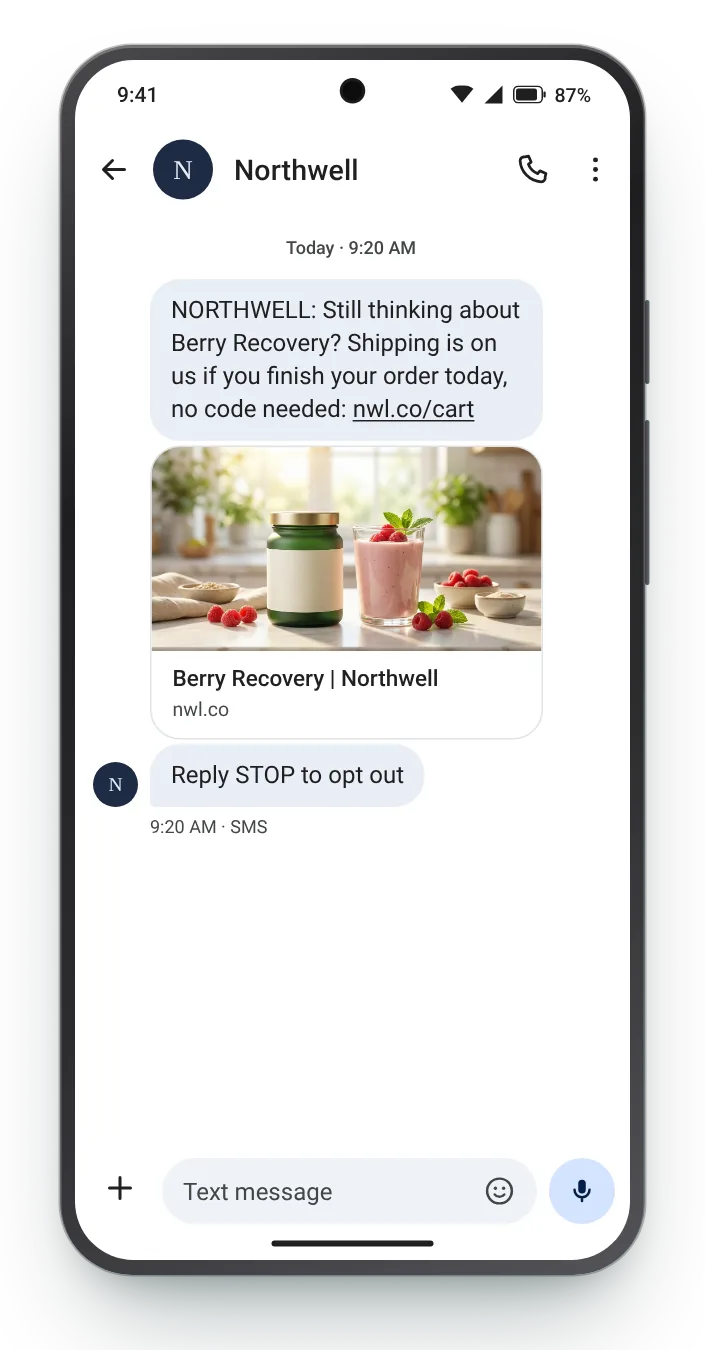
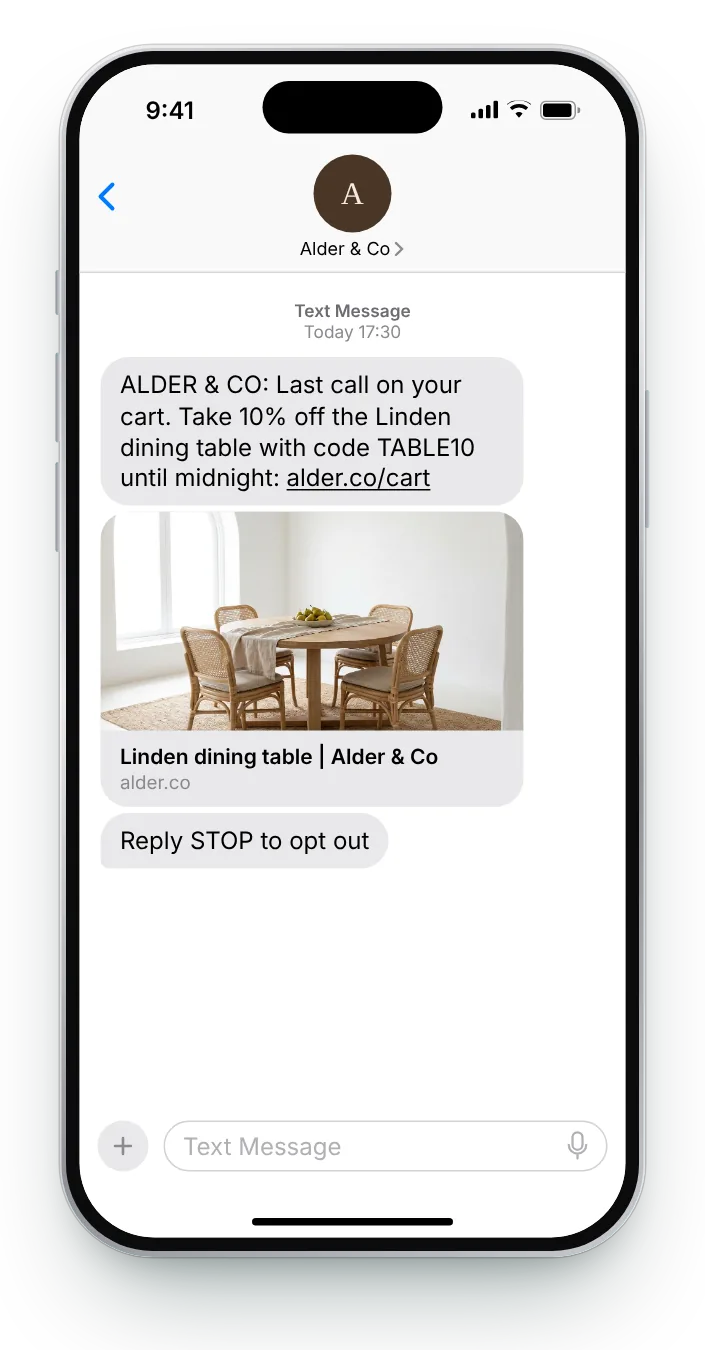
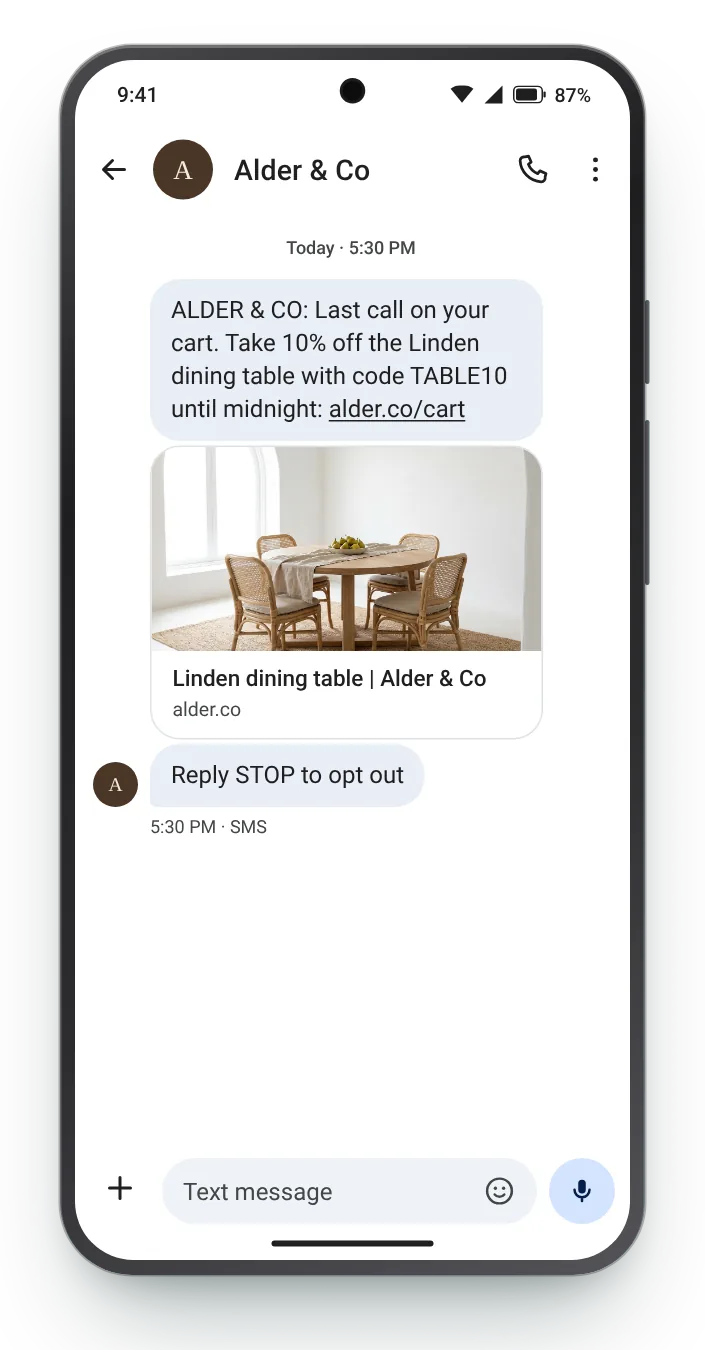
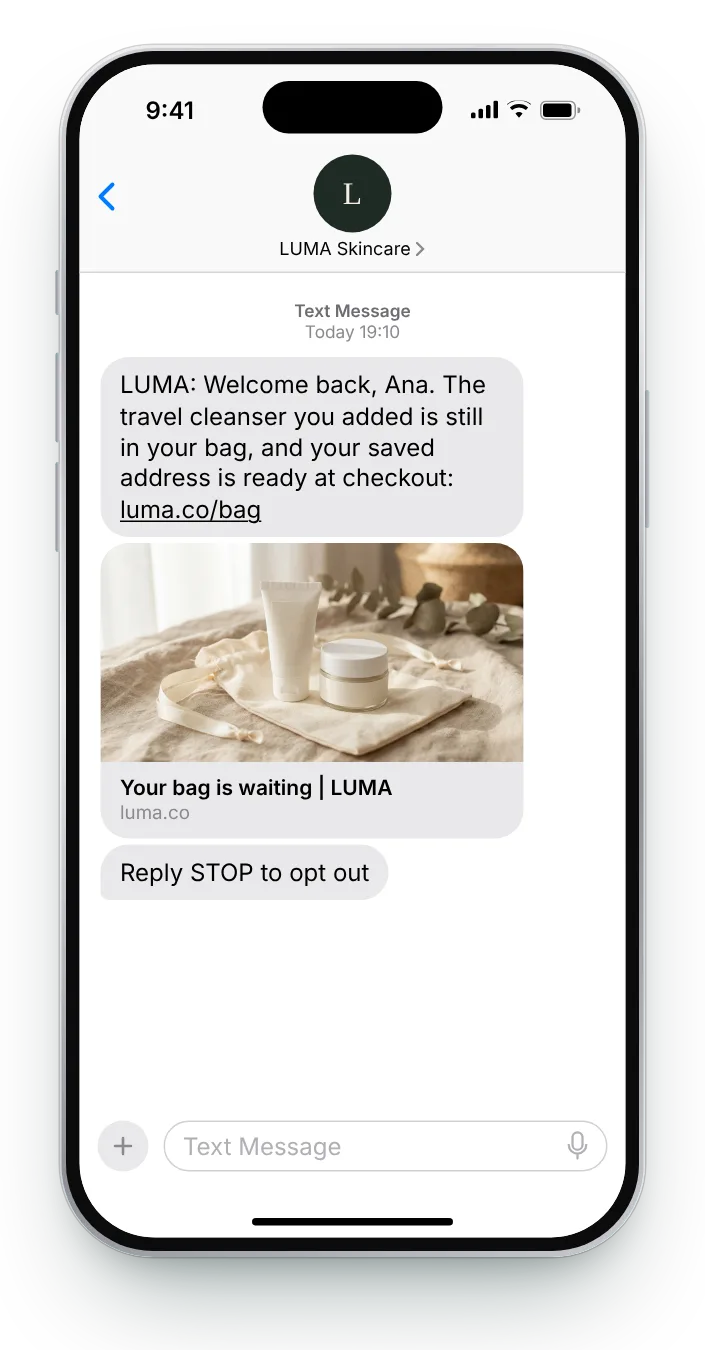
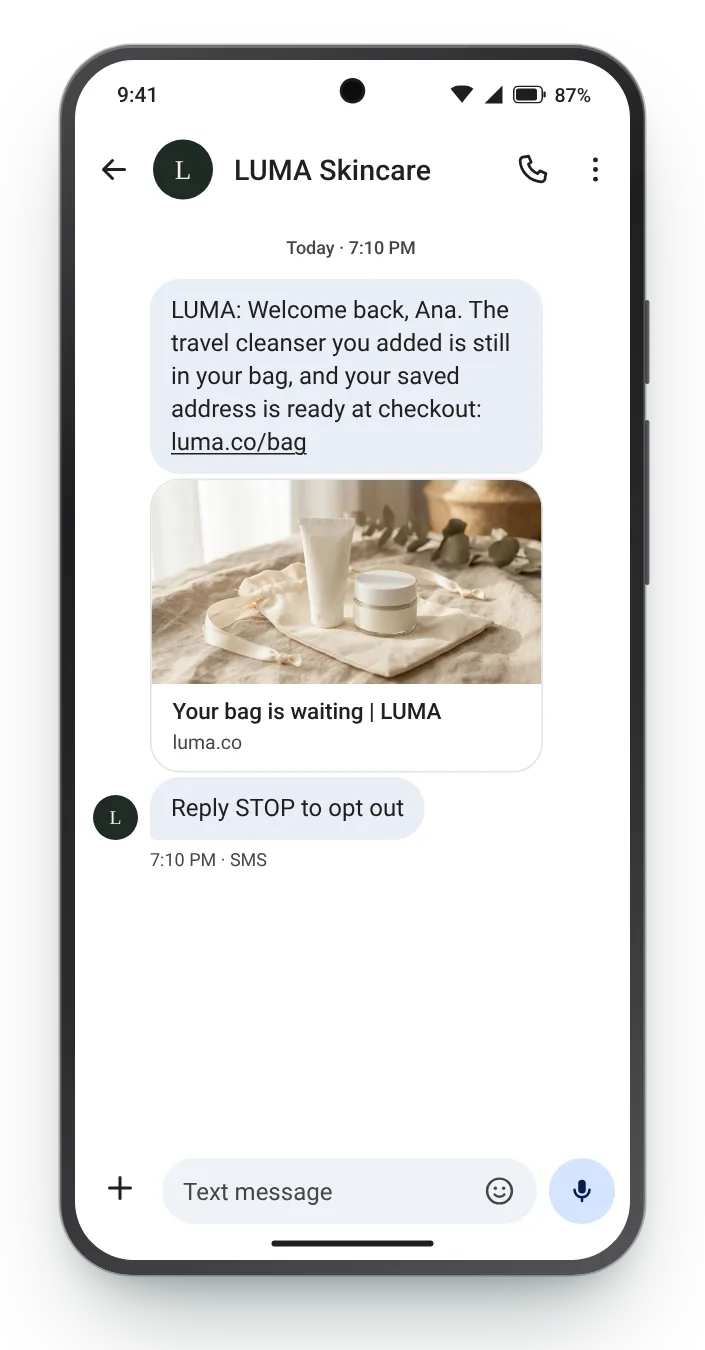
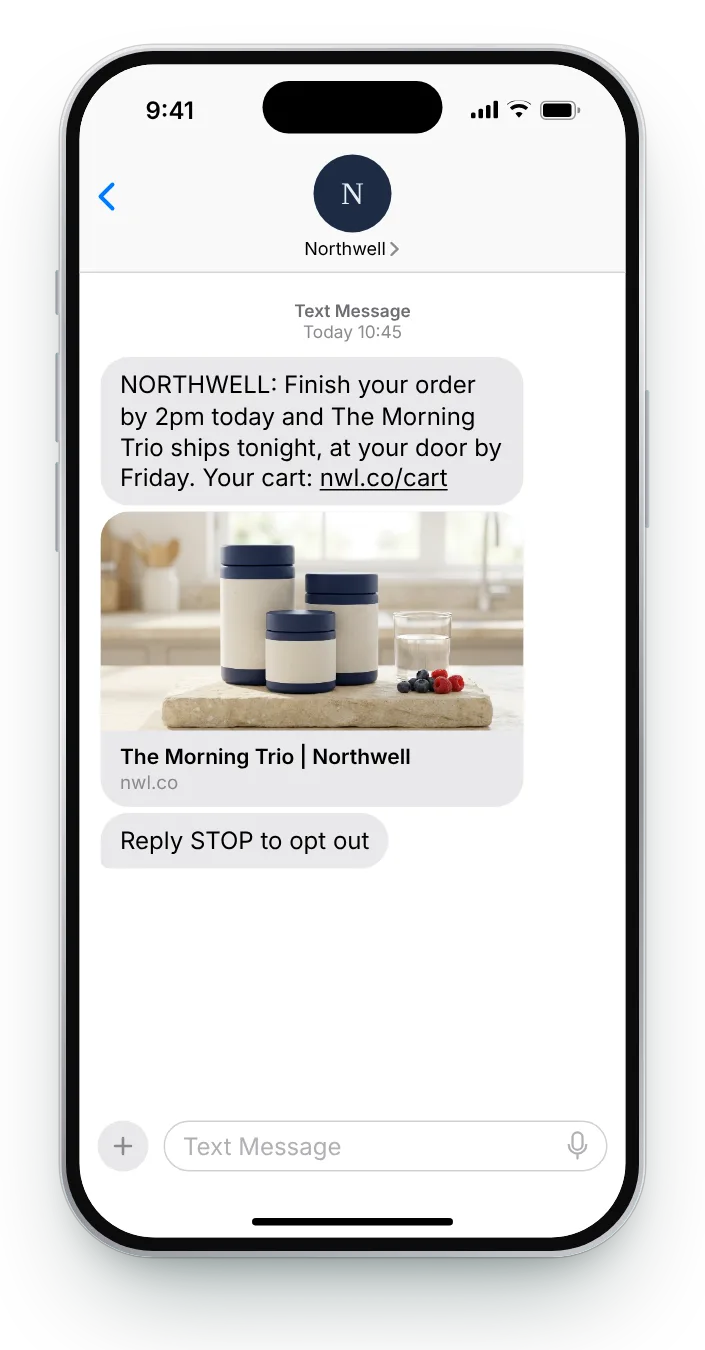
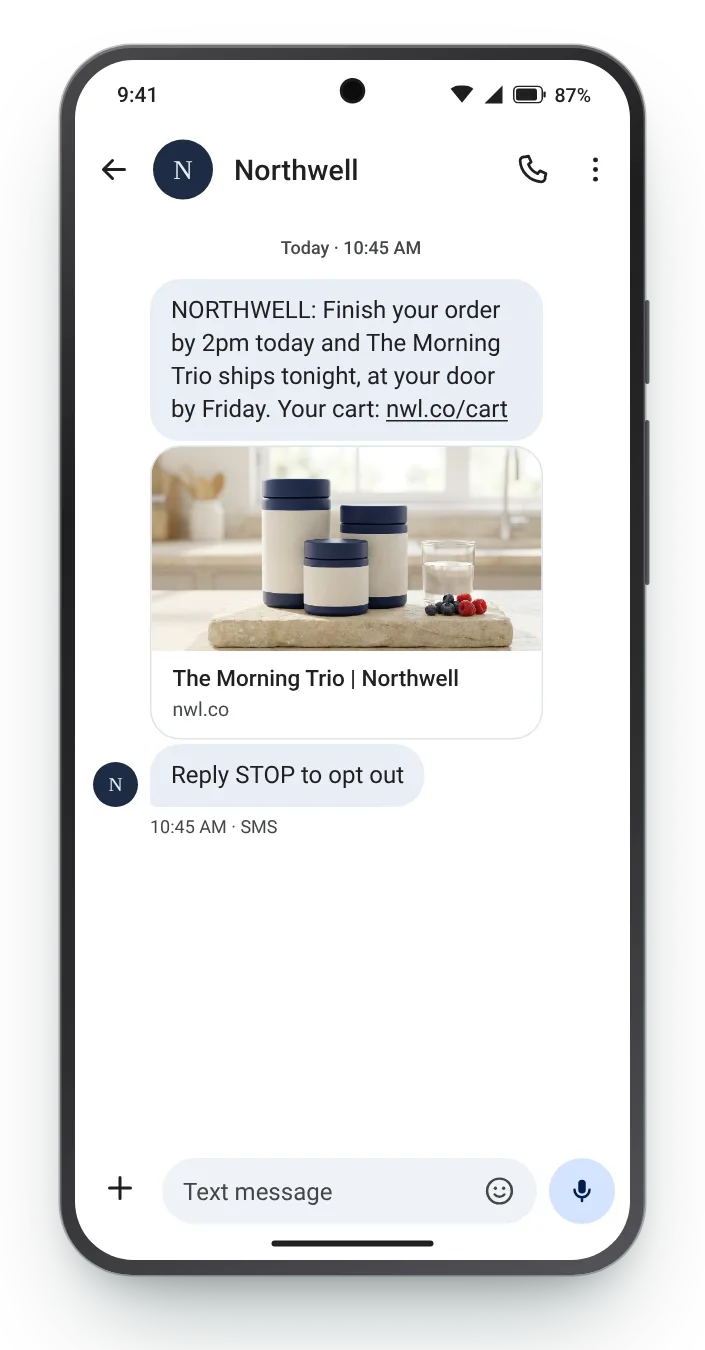
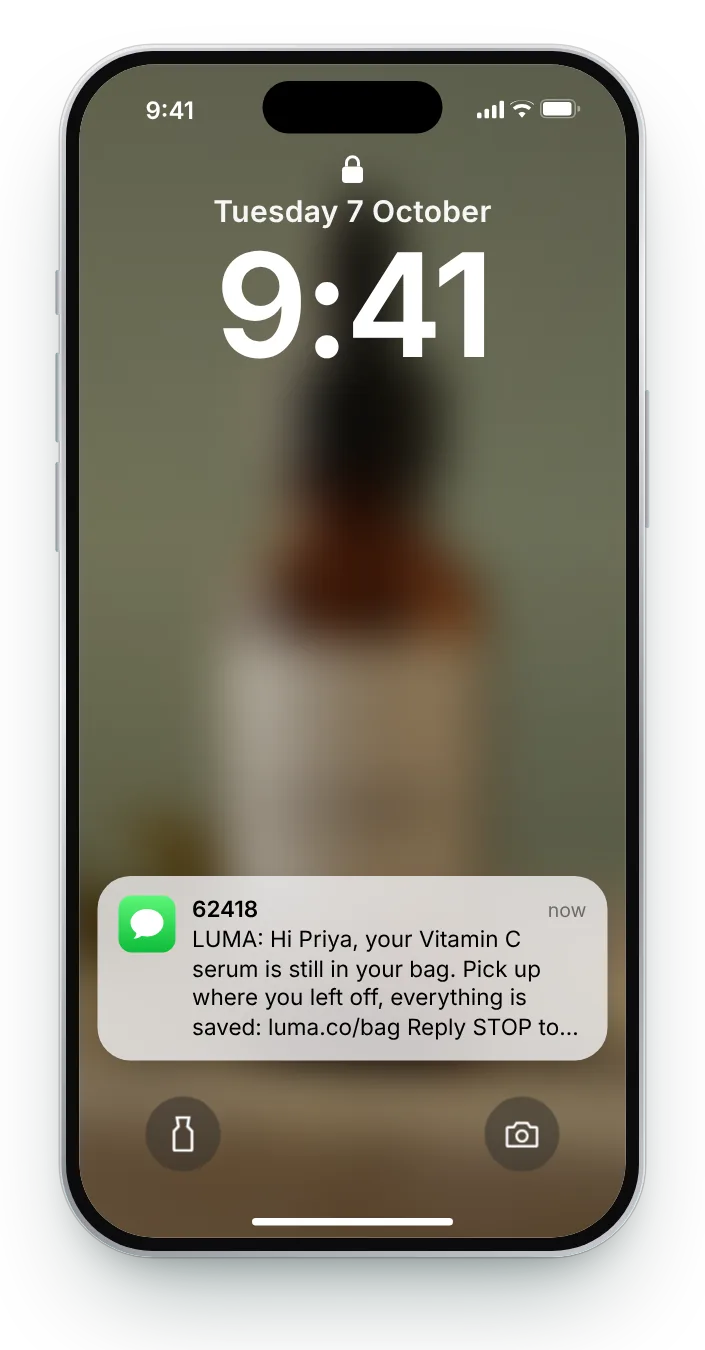
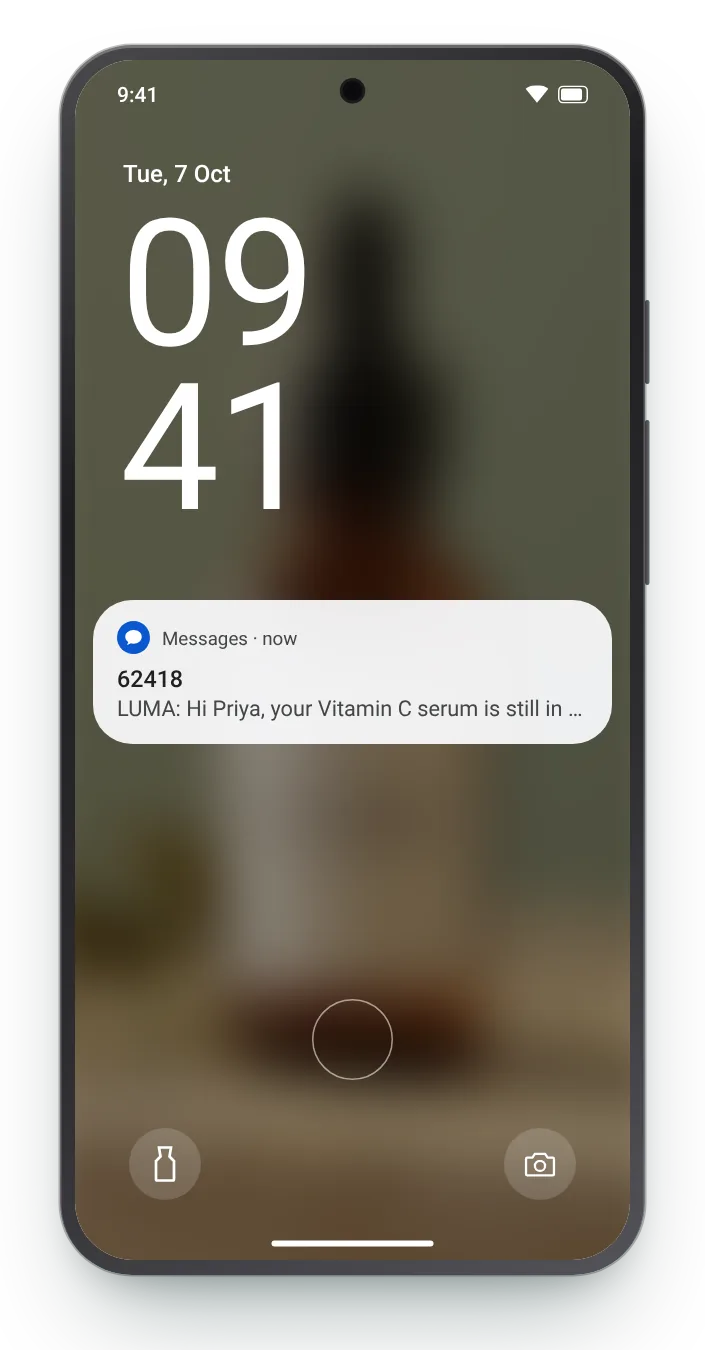
Each card carries its send time, so you can line the reminders up into your own sequence. Flip any phone between iPhone and Android, and switch to the short version when you want the link to do most of the work.


Lead with the link back, not a discount. Save any incentive for a later message, so you are not paying for orders that would have come anyway.


When the cart holds clothing, the open question is often the size. Inviting a reply turns the reminder into a conversation your team can close.


Shipping is often the cost that surprises people at checkout. Taking it away keeps your product price intact and answers the objection directly.


If a code is coming, it goes in the last message only. Put it in the first one and customers learn to leave carts and wait for it.


Name the count and one item, not the whole list. The link preview shows a single product, and the number tells them the rest is still there.


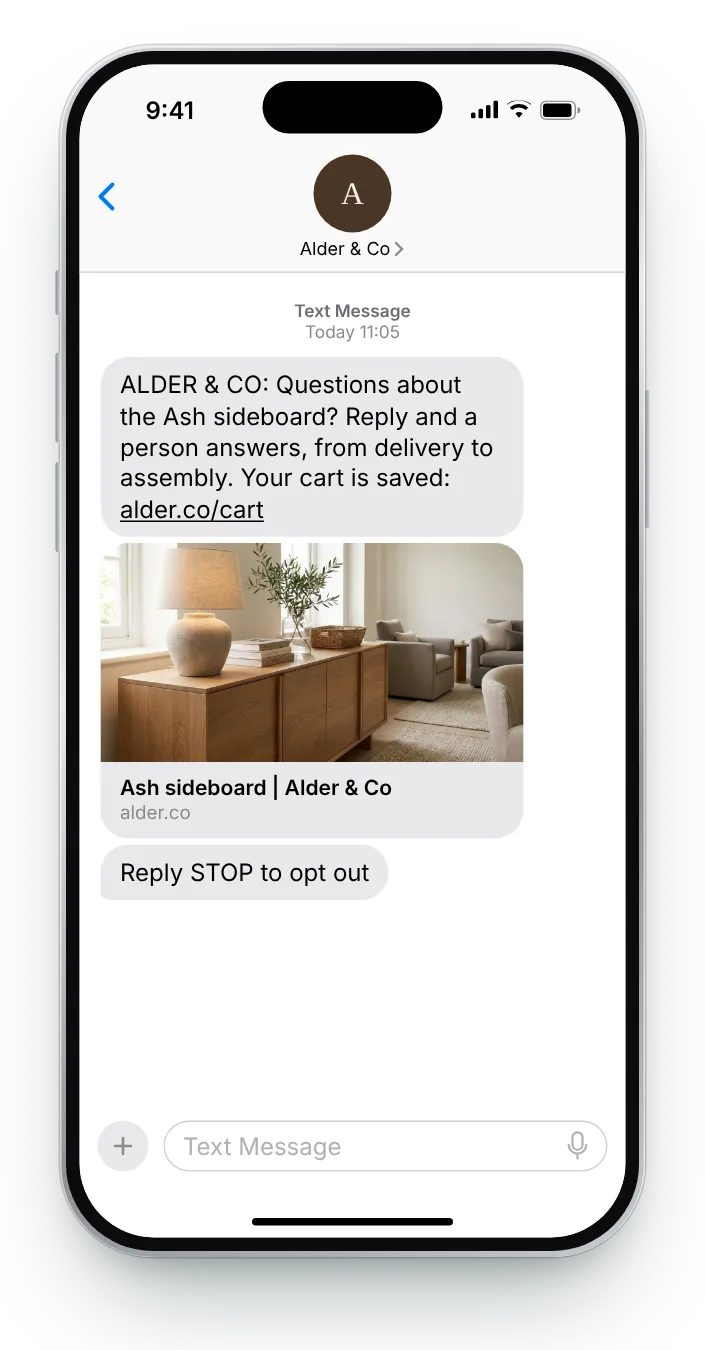
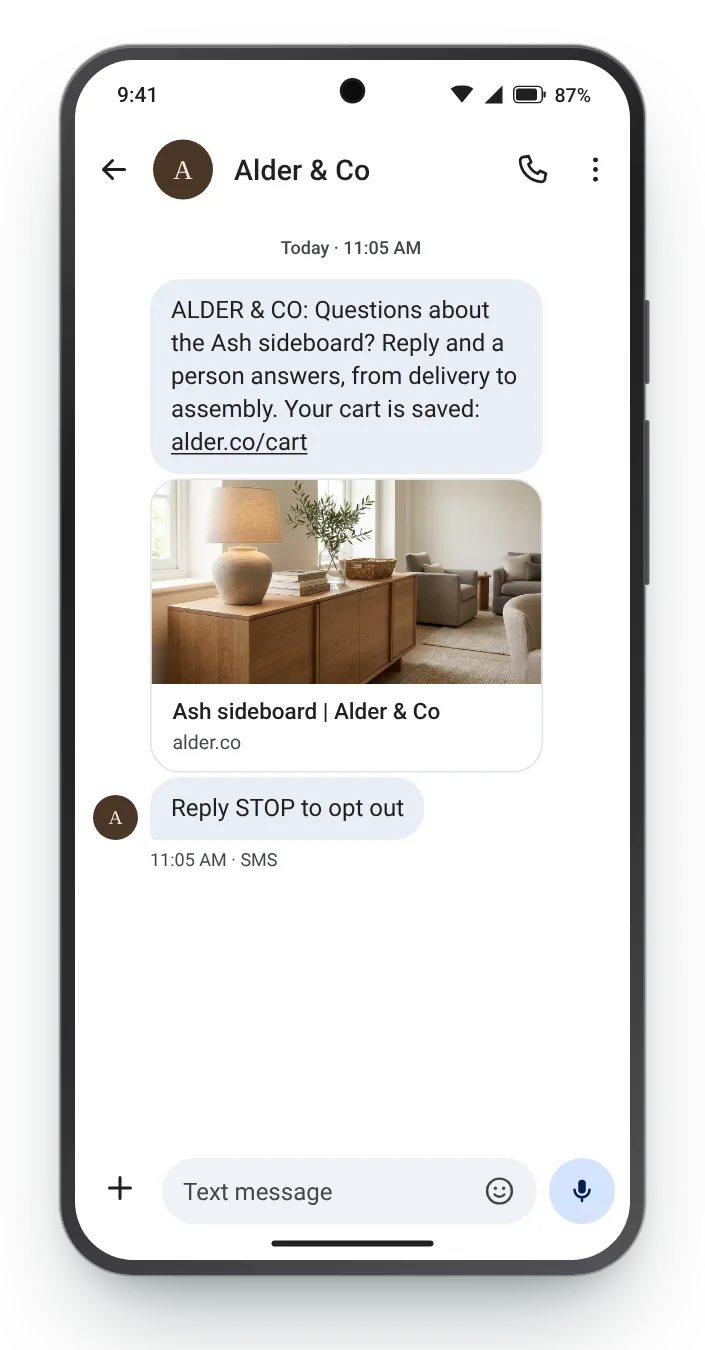
A big purchase stalls on questions more than on price. Offer a person who can answer them instead of money off.


Someone who has bought before already trusts you. Remove the effort of checkout instead of offering a discount they do not need.


A delivery date is an honest reason to finish today. It needs no discount and is easy to keep true.


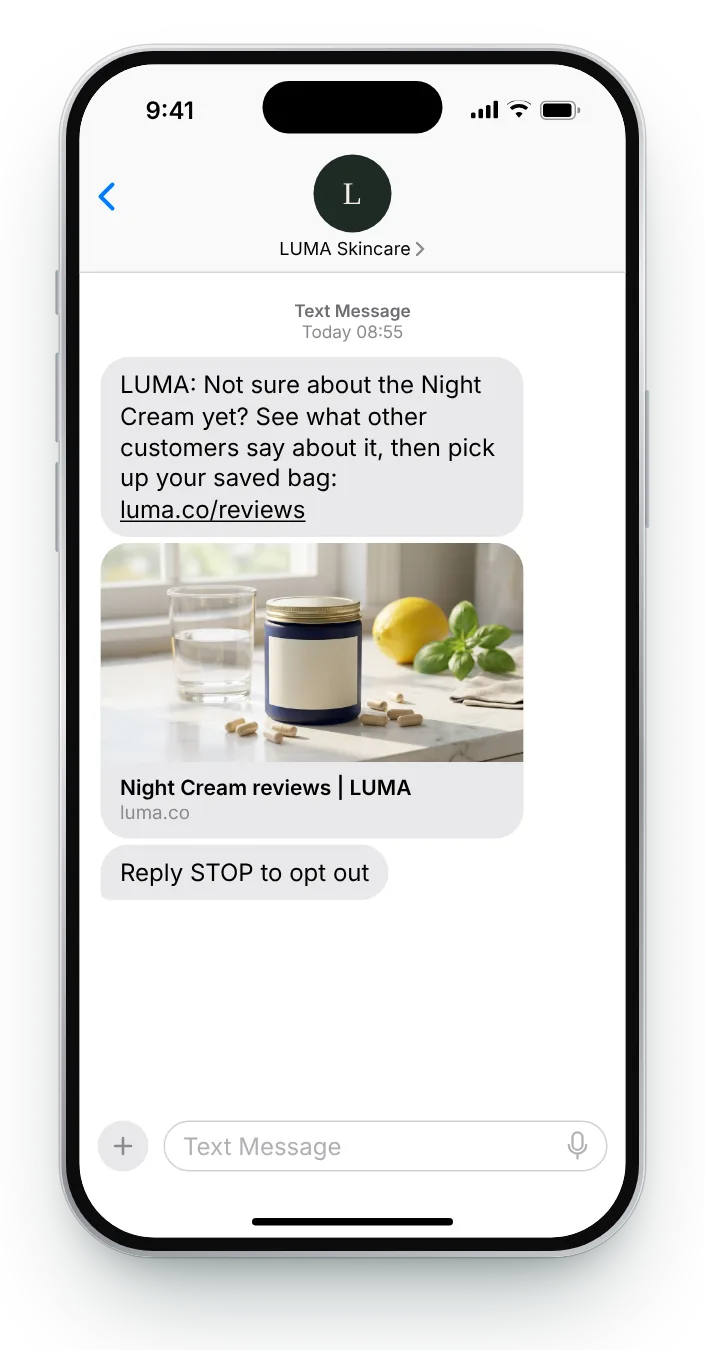
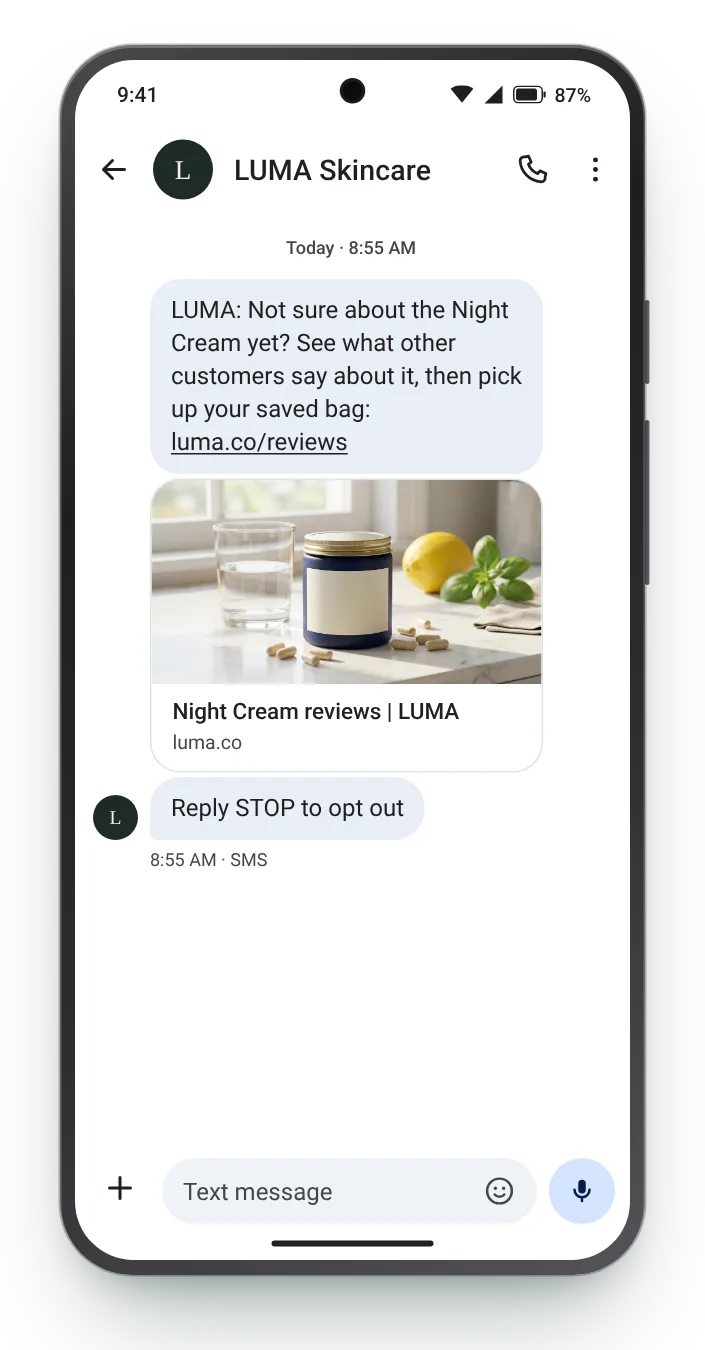
Some shoppers stall because they want a second opinion. A link to the reviews of the exact product answers that without a word of sales copy from you.


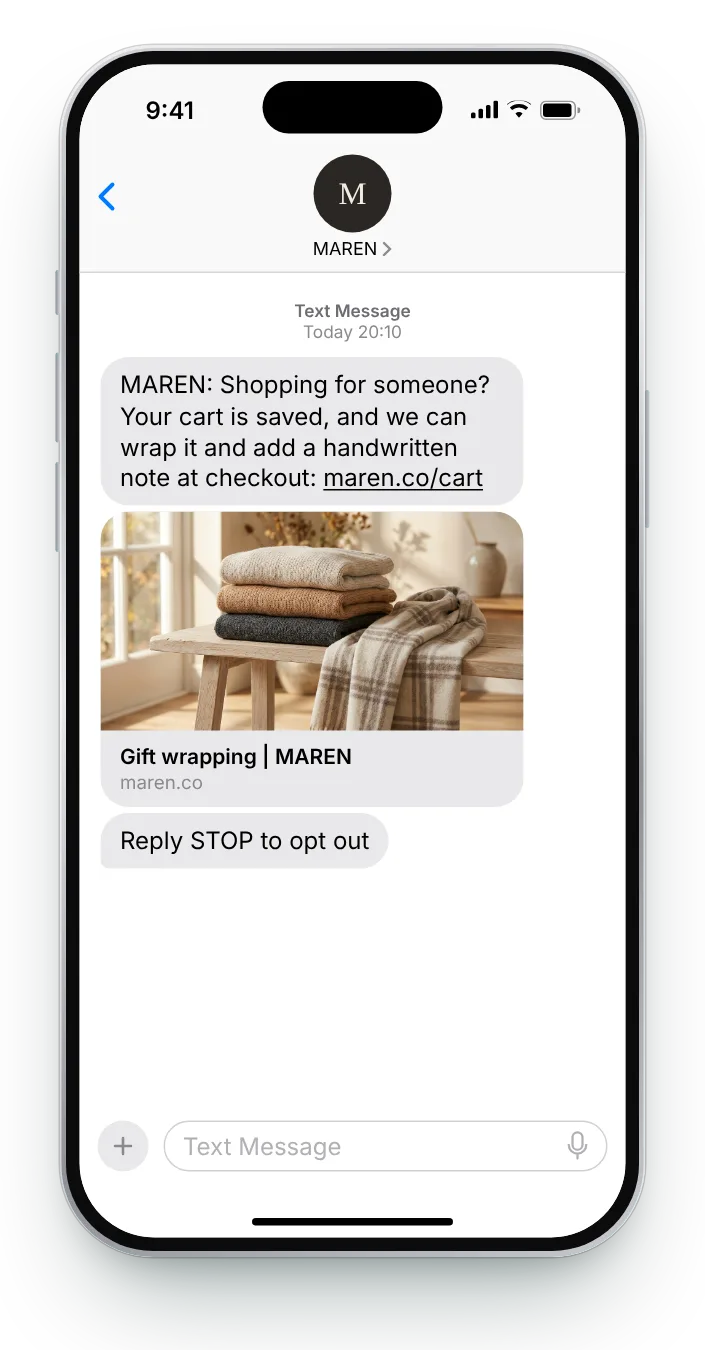
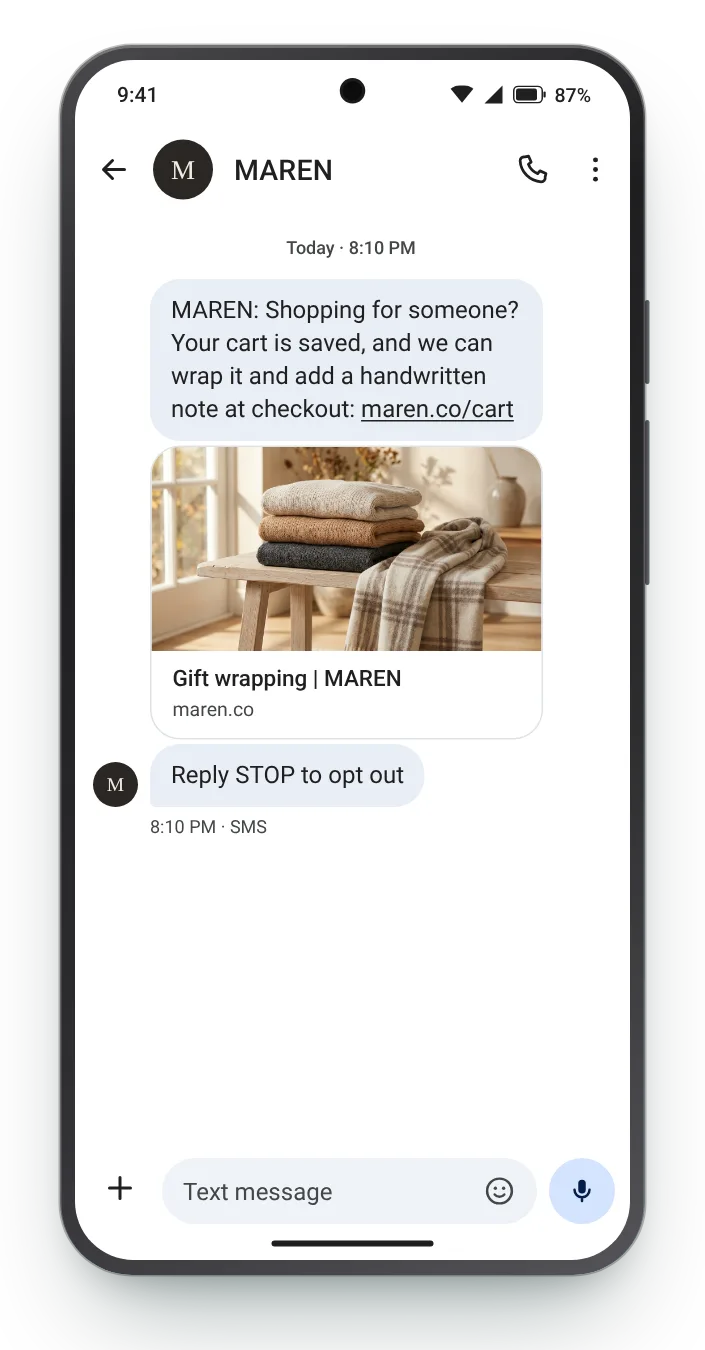
A cart left in the run-up to a holiday may well be a present. Offering wrapping and a note speaks to the reason they were shopping, not to the price.
Load any reminder, put in your product and your link, and the phone redraws as you type. Go past 160 plain characters and a second bar appears, which means a second segment on every send.


Your reminder arrives as a banner with a number for a sender. If the product is not in those first words, there is nothing to tap for.
Name the item before anything else, so the customer knows which cart you mean without opening the text.
Android cuts a collapsed notification after one line; an iPhone banner shows a few more. If it reads in one line, it reads everywhere.
The product image in the link preview appears only inside the conversation, so the banner has to work with words alone.
Zefir builds the reminder sequence with you, sends each step on the channel the shopper uses, and credits each recovered order to the reminder that brought it back.
Request access See how it worksWhen a subscriber adds products and leaves without paying, your store sends them a text with a link straight back to that cart. Zefir runs the whole flow across SMS and WhatsApp and ends it once the order comes in.
Send the first about an hour after the cart is left, the second around a day later and the last within three days. Zefir sends each step from your store's cart events and respects quiet hours in the shopper's time zone.
No, the early reminders usually do their job with the link alone, and a code fits best in the final message. Zefir ties each order back to the reminder behind it, so you can see which one earned the sale.
Only shoppers who agreed to receive marketing texts from you, because a cart reminder counts as marketing. Zefir builds the consent and opt-out handling into every reminder.
Staying under 160 plain characters; a single emoji or curly apostrophe cuts it to 70. Zefir counts segments on every reminder before sending, so none of them costs double.